Blue Terra Journal

  • Home
  • Spaceflight
    SpaceflightShow More
    NASA's SR-1 Freedom spacecraft.
    What Is NASA’s SR-1 Freedom Mission? The First Nuclear Reactor In Space Explained
    March 27, 2026
    Artist's impression of a NASA Moon base.
    NASA Moon Base: How The US Will Spend $20 Billion On This Ambitious Project
    March 25, 2026
    Russia's Soyuz rocket ascending to space.
    Russia’s Progress Spacecraft Suffers Mystery Glitch On Its Way To ISS; What Happened?
    March 23, 2026
    Robert Goddard
    Celebrating Robert Goddard – The Man Who Changed Rocketry 100 Years Ago
    March 17, 2026
    International Space Station gets extension to beat China
    Watch Out China! US Proposes Extending International Space Station Lifespan To 2032
    March 10, 2026
  • Astronomy
    AstronomyShow More
    Meteor spotted over Houston.
    Video Captures 1-Ton Meteor Exploding Over Houston Skies, NASA Releases Statement
    March 22, 2026
    NASA black hole simulation
    Fall Into A Black Hole With This Incredibly Scary Simulation Made By NASA
    March 18, 2026
    Comet C/2026 A1 MAPS
    Comet C/2026 A1 MAPS: What Are ‘Sun-Grazer’ Comets And Why Are They Special?
    March 12, 2026
    Moon is safe from asteroid 2024 YR4.
    The Moon Is Safe! James Webb Space Telescope Rules Out Asteroid 2024 YR4’s Collision
    March 6, 2026
    NASA Moon orbiter
    NASA Prepares To Save Its Orbiter During Total Solar Eclipse On The Moon
    March 3, 2026
  • India
    IndiaShow More
    Shubhanshu Shukla aboard the ISS.
    ISRO Astronaut Shubhanshu Shukla Awarded Ashoka Chakra For Heroic Ax-4 Mission
    February 9, 2026
    ISRO's PSLV lifts off to space.
    ISRO’s PSLV Rocket Suffers Third Stage Failure After Successful Liftoff; Payloads Lost
    January 23, 2026
    Dhruva Space team at ISRO facility.
    India’s Dhruva Space To Launch 10 Missions, Including 1st Northeastern Satellite, On ISRO’s PSLV
    January 12, 2026
    ISRO's PSLV rocket
    ISRO To Seek Redemption With PSLV-C62 Mission Launch On January 12
    January 12, 2026
    ISRO SSLV
    ISRO’s SSLV Rocket Just Got Better After Latest Third Stage Test Fire
    December 31, 2025
  • Artemis
    ArtemisShow More
    NASA Artemis II crew
    NASA’s Christina Koch Turns ‘Space Plumber’ To Fix $30 Million Toilet On Artemis II Mission
    April 3, 2026
    NASA Orion spacecraft
    NASA’s Artemis II Astronauts Are Moon-Bound After Successful Trans-Lunar Injection Burn
    April 3, 2026
    NASA Artemis II lifts off.
    Artemis II Lifts Off! NASA Launches 4 Astronauts To The Moon After Over 50 Years
    April 2, 2026
    NASA's Artemis II astronauts
    NASA Artemis II Launch Live: Watch Humanity Return To The Moon On April 2
    April 2, 2026
    NASA Apollo 8 image
    NASA Artemis II: Why This Moon Mission Is Our Generation’s Apollo 8
    March 30, 2026
  • More
    • About
    • Privacy Policy
    • Terms
    • Contact

Blue Terra Journal

  • Home
  • Spaceflight
  • Astronomy
  • India
  • Artemis
Search
  • Pages
    • About
    • Contact
    • Privacy Policy
    • Terms

Home - Astronomy - Meet Pandora, The NASA Observatory Made With James Webb Telescope’s Spare Parts

Astronomy

Meet Pandora, The NASA Observatory Made With James Webb Telescope’s Spare Parts

It will launch in early 2026.

Harsh Vardhan
Last updated: December 27, 2025 1:39 PM
Harsh Vardhan
Share
4 Min Read
Pandora NASA
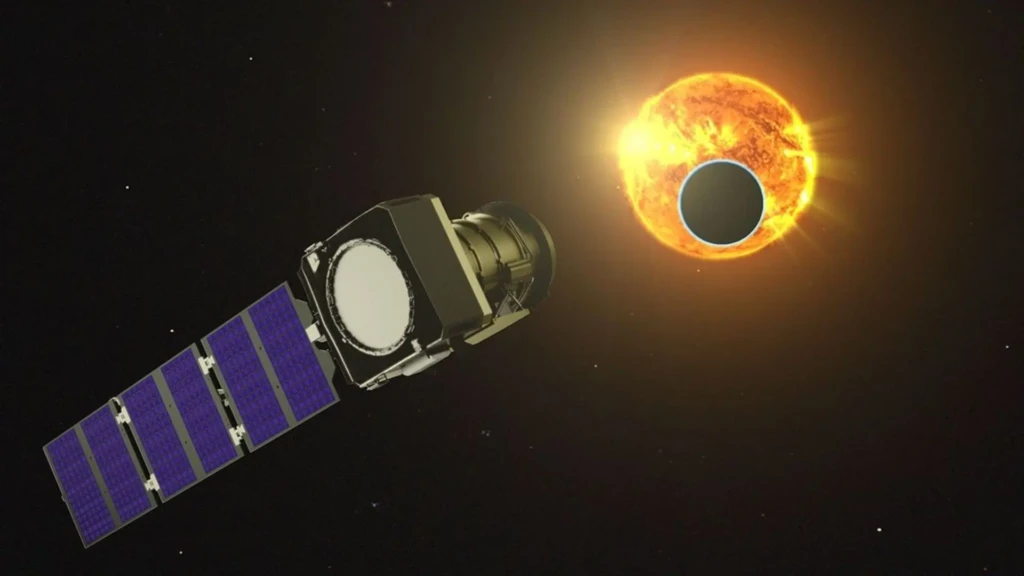
Artist's concept of Pandora telescope. Image: NASA
SHARE

NASA is set to add another telescope to its list of powerful observatories. Named Pandora, this space telescope is designed to observe at least 20 exoplanets (worlds outside our solar system) and find atmospheres dominated by hydrogen or water. Pandora will also study light from stars these exoplanets are orbiting to determine the properties of stellar surfaces.

Pandora is targeted for launch in January 2026 and it will carry out the observations in visible and infrared light from an altitude of 600 km in low-Earth orbit. Visible light is what the human eye can see and infrared is what it can’t – infrared can only be felt as heat.

Pandora’s objectives

The objective of the telescope is to find hydrogen and water dominated atmospheres on 20 exoplanets in one year of its planned lifespan. According to NASA, Pandora will study every planet 10 times with each observation lasting 24 hours.

Spectroscopy is the primary technique scientists will use to identify gases in the planetary atmospheres. It is the process of studying light by splitting it into different colours.
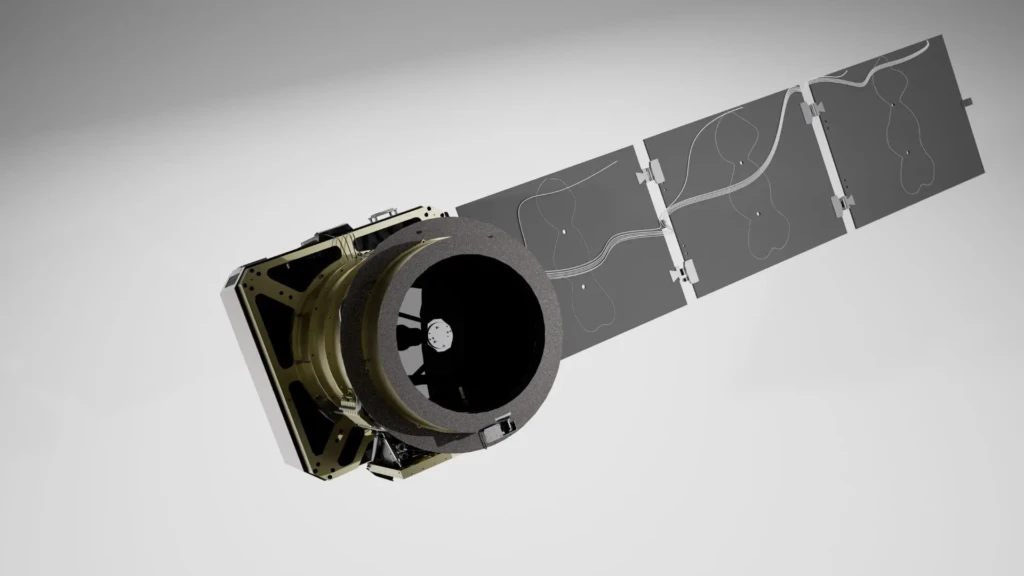
Pandora NASA
Artist’s concept of NASA’s Pandora telescope. Image: NASA

When a planet passes in front of its star, the light emerging from the star travels through the atmosphere. Now this light changes as it interacts with the atmospheric gases before reaching a telescope; and this change is determined by the nature of the gases. If there’s hydrogen or water in the atmosphere, light will change a certain way and if there’s nitrogen, the change will be different.

Using its infrared detector, Pandora will collect starlight and break it down using a spectroscope to find traces of gases and determine their nature in an exoplanet.

“We see the presence of water as a critical aspect of habitability because water is essential to life as we know it,” Ben Hord, NASA’s postdoctoral program fellow said in a statement. “The problem with confirming its presence in exoplanet atmospheres is that variations in light from the host star can mask or mimic the signal of water. Separating these sources is where Pandora will shine.”

Pandora is the size of a small satellite weighing about 325 kg (716 pounds) and is equipped with a 45 cm (17 inches) wide mirror, and a single-wing solar array. According to Hord, its infrared detector is a spare developed for the James Webb Space Telescope which is the most powerful infrared telescope in existence. Hord says that Pandora’s operation will “improve Webb’s ability to separate the star’s signals from those of the planet’s atmosphere,” allowing it to make more precise atmospheric measurements.

ALSO READ: NASA’s Webb Telescope Discovers 13 Billion Years Old Supernova; Breaks Own Record

ALSO READ: James Webb Space Telescope Finds Strongest Clues Of Atmosphere On A Scorching Super-Earth


TAGGED:ExoplanetJames Webb Space TelescopeNASAPandoraSpace
Share This Article
Facebook Pinterest Whatsapp Whatsapp LinkedIn Copy Link Print

Latest News

NASA Artemis II crew
NASA’s Christina Koch Turns ‘Space Plumber’ To Fix $30 Million Toilet On Artemis II Mission
Artemis
NASA Orion spacecraft
NASA’s Artemis II Astronauts Are Moon-Bound After Successful Trans-Lunar Injection Burn
Artemis
NASA Artemis II lifts off.
Artemis II Lifts Off! NASA Launches 4 Astronauts To The Moon After Over 50 Years
Artemis
NASA's Artemis II astronauts
NASA Artemis II Launch Live: Watch Humanity Return To The Moon On April 2
Artemis

You Might Also Like

Comet 3I/ATLAS pre-perihelion.
Astronomy

ISRO Shares Picture Of Comet 3I/ATLAS Captured By Indian Telescope

November 24, 2025
NASA's Artemis II SLS Rocket
Artemis

NASA Delays Artemis II Moon Mission Launch To March – Here’s Why

February 28, 2026
NASA James Webb Space Telescope
Astronomy

NASA’s Webb Telescope Discovers 13 Billion Years Old Supernova; Breaks Own Record

December 18, 2025
Meteor spotted over Houston.
Astronomy

Video Captures 1-Ton Meteor Exploding Over Houston Skies, NASA Releases Statement

March 22, 2026
© 2026, Blue Terra Journal
  • About
  • Privacy Policy
  • Terms
  • Contact
Welcome Back!

Sign in to your account

Username or Email Address
Password

Lost your password?