Blue Terra Journal

  • Home
  • Spaceflight
    SpaceflightShow More
    SpaceX Starship
    SpaceX Starship’s 12th Test Flight Targeted On May 20; No Booster Catch This Time
    May 13, 2026
    SpaceX's Starship during launch rehearsal.
    SpaceX Completes Starship’s Launch Rehearsal For Flight 12 This Week; What To Expect?
    May 13, 2026
    China US rivalry reach new heights.
    ‘Rival’ China Is Unintentionally The Biggest Motivator For NASA’s Moon Ambitions
    April 28, 2026
    NASA Voyager 1 illustration
    NASA Shuts Down Another Voyager 1 Instrument; How Long Can This Spacecraft Last?
    April 22, 2026
    NASA's SR-1 Freedom spacecraft.
    What Is NASA’s SR-1 Freedom Mission? The First Nuclear Reactor In Space Explained
    March 27, 2026
  • Astronomy
    AstronomyShow More
    Artist's impression of NASA's Psyche spacecraft.
    NASA’s Psyche Spacecraft Will Zoom Past Mars Today On Its Way To Metal-Rich Asteroid
    May 15, 2026
    Comet MAPS image
    Video: Comet MAPS destroyed after plunging into the Sun; event caught by NASA missions
    April 18, 2026
    Apophis asteroid flyby
    ‘God Of Chaos’: Apophis Asteroid Will Fly Dangerously Close To Earth Exactly 5 Years From Now
    April 14, 2026
    Meteor spotted over Houston.
    Video Captures 1-Ton Meteor Exploding Over Houston Skies, NASA Releases Statement
    March 22, 2026
    NASA black hole simulation
    Fall Into A Black Hole With This Incredibly Scary Simulation Made By NASA
    March 18, 2026
  • India
    IndiaShow More
    Shubhanshu Shukla aboard the ISS.
    ISRO Astronaut Shubhanshu Shukla Awarded Ashoka Chakra For Heroic Ax-4 Mission
    February 9, 2026
    ISRO's PSLV lifts off to space.
    ISRO’s PSLV Rocket Suffers Third Stage Failure After Successful Liftoff; Payloads Lost
    January 23, 2026
    Dhruva Space team at ISRO facility.
    India’s Dhruva Space To Launch 10 Missions, Including 1st Northeastern Satellite, On ISRO’s PSLV
    January 12, 2026
    ISRO's PSLV rocket
    ISRO To Seek Redemption With PSLV-C62 Mission Launch On January 12
    January 12, 2026
    ISRO SSLV
    ISRO’s SSLV Rocket Just Got Better After Latest Third Stage Test Fire
    December 31, 2025
  • Artemis
    ArtemisShow More
    NASA Artemis II mission
    Welcome Home! NASA’s Artemis II Astronauts Are Back After Historic Moon Voyage
    April 22, 2026
    NASA Artemis II iPhone image
    iPhones Reigned Supreme On NASA’s Artemis II Moon Mission
    April 10, 2026
    Artemis II NASA
    All Eyes On Scary Artemis II Reentry As NASA Moon Mission Nears Completion
    April 9, 2026
    NASA Artemis II
    NASA Artemis II Crew Names Moon Crater ‘Carroll’ After Commander Reid Wiseman’s Late Wife
    April 7, 2026
    NASA Artemis II
    Watch: NASA Artemis II Astronauts Begin Flyby Of Moon’s Far Side For The First Time Ever
    April 9, 2026
  • More
    • About
    • Privacy Policy
    • Terms
    • Contact

Blue Terra Journal

  • Home
  • Spaceflight
  • Astronomy
  • India
  • Artemis
Search
  • Pages
    • About
    • Contact
    • Privacy Policy
    • Terms

Home - Astronomy - Geminid Meteor Shower 2025: Peak Time, How To Watch And What To Expect This Week

Astronomy

Geminid Meteor Shower 2025: Peak Time, How To Watch And What To Expect This Week

2025's last major meteor shower event is here.

Harsh Vardhan
Last updated: December 10, 2025 9:37 PM
Harsh Vardhan
Share
4 Min Read
Geminid meteor shower NASA
Skygazers may get to see up to 120 meteors per hour under perfect conditions.
SHARE

Contents
  • Why do we see meteor showers?
  • The Geminid meteor shower
  • Where to spot the Geminid meteors

The Geminid meteor shower is here and it’s peaking this weekend. This annual cosmic firework that started on December 4 will stay active until December 20, and will hit its peak overnight on December 13-14. Since it’s the strongest of all meteor showers this year, skygazers can expect to see up to 120 meteors every hour under perfect conditions.
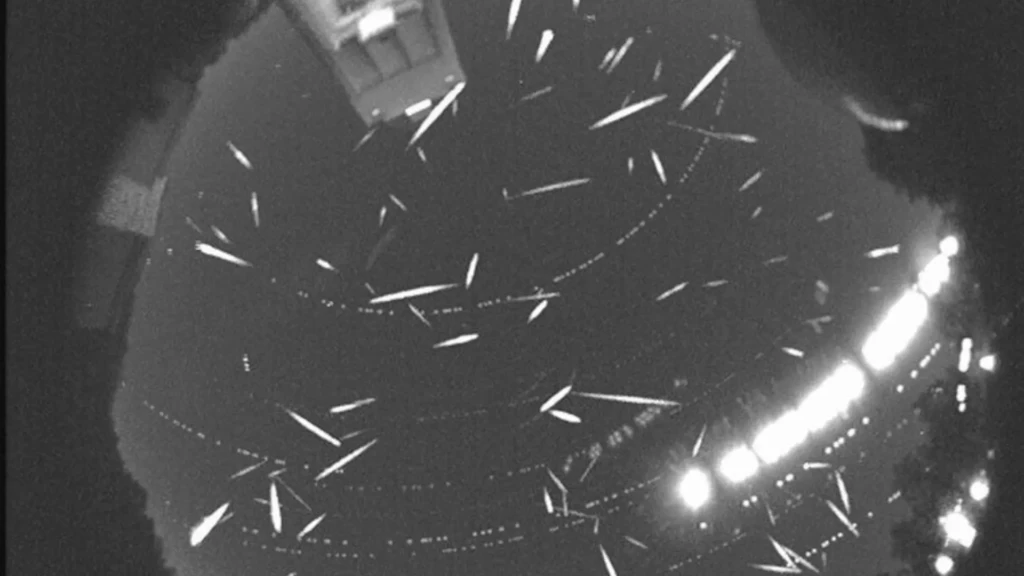
Geminid meteor shower
A composite image of Geminid meteor shower, 2014. Image: NASA

The Geminids mark the last major meteor shower of a year, which brings nine other such events. The other meteor showers include Quadrantids (January), Lyrids (April), Eta Aquariids (May), Perseids (August), Draconids (October), Orionids (October), Taurids (November) and Leonids (November). There’s also the Ursids meteor shower later this month, but it’s not as prominent. 

Why do we see meteor showers?

Meteor showers occur when Earth passes through a debris trail of a comet as it orbits the Sun. The debris results from the Sun heating up the comet, causing it to release chunks of dust and rocky material. When Earth passes through this debris trail while orbiting the Sun, these chunks collide with our planet’s atmosphere and disintegrate, and we see bright streaks of light in the night sky.

The Geminid meteor shower

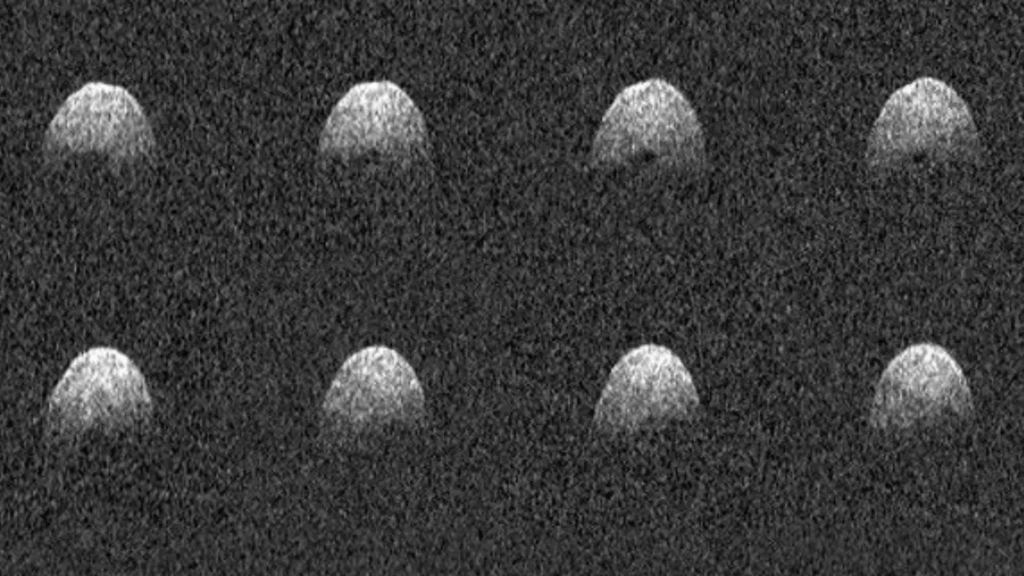
According to NASA, the Geminids first began appearing in the mid-1800s and they originate from an object designated 3200 Phaethon. While it is considered an asteroid, scientists believe it could be a “dead comet” or a “rock comet.”
Geminid meteor shower NASA
Asteroid 3200 Phaethon. Image: NASA/Arecibo Observatory

Measuring 5.1 km across, asteroid 3200 Phaethon was discovered on October 11, 1983. This object has a comet-like highly elliptical orbit around the Sun and takes just 1.4 years to complete one revolution. Astronomers have noted that it does not develop a cometary tail when passing close to the Sun and the bits and pieces breaking off this object is denser than cometary dust.

Where to spot the Geminid meteors

The Geminid meteors will appear to emerge from the constellation Gemini – which inspired its name. NASA, however, advises not to look only at the Gemini constellation because the meteors will be visible throughout the night sky.

The best time for viewing the cosmic event in India is from around midnight on December 13 through to dawn on December 14, when the Gemini constellation will be at its highest point in the eastern sky. Light interference should be minimal from the Moon which will be in its waning crescent phase.

Be sure to spend at least a good 20-30 minutes in the dark to allow your eyes to adjust and find a spot away from light pollution that may drown out the glowing meteor streaks. Avoid phone screens or bright lights to make your eyes sensitive enough for even the faint meteors.

ALSO READ: Meteor Explodes In The Sky Over Portugal, ESA Releases Fiery Video

ALSO READ: As Taurid Meteor Shower Peaks, Moon Is Bearing The Brunt Of It

TAGGED:asteroid 3200 PhaethonGeminid meteor showergeminidsmeteorNASA
Share This Article
Facebook Pinterest Whatsapp Whatsapp LinkedIn Copy Link Print

Latest News

Artist's impression of NASA's Psyche spacecraft.
NASA’s Psyche Spacecraft Will Zoom Past Mars Today On Its Way To Metal-Rich Asteroid
Astronomy
SpaceX Starship
SpaceX Starship’s 12th Test Flight Targeted On May 20; No Booster Catch This Time
Spaceflight
SpaceX's Starship during launch rehearsal.
SpaceX Completes Starship’s Launch Rehearsal For Flight 12 This Week; What To Expect?
Spaceflight
China US rivalry reach new heights.
‘Rival’ China Is Unintentionally The Biggest Motivator For NASA’s Moon Ambitions
Spaceflight

You Might Also Like

NASA Crew-11 astronauts.
Spaceflight

NASA Targets Jan 15 For First Ever Medical Evacuation Of International Space Station Astronauts

January 14, 2026
Jared Isaacman.
Artemis

Jared Isaacman May Be The Best Thing That Happened For NASA

November 18, 2025
image 14
Astronomy

As Taurid Meteor Shower Peaks, Moon Is Bearing The Brunt Of It
November 7, 2025
Comet 3I/ATLAS NASA
Astronomy

NASA Finally Releases Comet 3I/ATLAS Images Captured From Mars & Beyond

November 26, 2025
© 2026, Blue Terra Journal
  • About
  • Privacy Policy
  • Terms
  • Contact
Welcome Back!

Sign in to your account

Username or Email Address
Password

Lost your password?