Blue Terra Journal

  • Home
  • Spaceflight
    SpaceflightShow More
    NASA's MAVEN orbiter
    NASA’s MAVEN Orbiter Confirmed Dead On Mars; What Did It Achieve In 11 Years?
    June 5, 2026
    Blue Origin's New Glenn rocket.
    What Blue Origin’s New Glenn Explosion Means For NASA And Its Moon Ambitions
    June 10, 2026
    Elon Musk SpaceX Starship
    Elon Musk’s SpaceX launches new Starship V3 on 12th mission, but it wasn’t flawless
    June 5, 2026
    SpaceX Starship
    SpaceX Starship’s 12th Test Flight Targeted On May 20; No Booster Catch This Time
    May 31, 2026
    SpaceX's Starship during launch rehearsal.
    SpaceX Completes Starship’s Launch Rehearsal For Flight 12 This Week; What To Expect?
    May 13, 2026
  • Astronomy
    AstronomyShow More
    The galactic bulge by Euclid telescope. Credit: European Space Agency
    This Euclid Telescope Image Of Milky Way’s Centre With 60 Million Stars May Break Your Brain
    June 27, 2026
    UFO videos shared by US government
    UFO Alert! US Government Releases New Videos Of Glowing Orbs Floating In The Sky
    June 13, 2026
    Meteor over Mayon volcano
    Watch: Flashy Green Meteor Streaks Over Erupting Volcano In The Philippines
    May 27, 2026
    Artist's impression of NASA's Psyche spacecraft.
    NASA’s Psyche Spacecraft Will Zoom Past Mars Today On Its Way To Metal-Rich Asteroid
    May 15, 2026
    Comet MAPS image
    Video: Comet MAPS destroyed after plunging into the Sun; event caught by NASA missions
    April 18, 2026
  • India
    IndiaShow More
    Shubhanshu Shukla aboard the ISS.
    ISRO Astronaut Shubhanshu Shukla Awarded Ashoka Chakra For Heroic Ax-4 Mission
    February 9, 2026
    ISRO's PSLV lifts off to space.
    ISRO’s PSLV Rocket Suffers Third Stage Failure After Successful Liftoff; Payloads Lost
    January 23, 2026
    Dhruva Space team at ISRO facility.
    India’s Dhruva Space To Launch 10 Missions, Including 1st Northeastern Satellite, On ISRO’s PSLV
    January 12, 2026
    ISRO's PSLV rocket
    ISRO To Seek Redemption With PSLV-C62 Mission Launch On January 12
    January 12, 2026
    ISRO SSLV
    ISRO’s SSLV Rocket Just Got Better After Latest Third Stage Test Fire
    December 31, 2025
  • Artemis
    ArtemisShow More
    NASA Artemis III crew
    NASA Artemis III: Meet The Astronauts Who Will Set The Stage For 2028 Moon Landing
    June 10, 2026
    Blue Origin's New Glenn rocket.
    What Blue Origin’s New Glenn Explosion Means For NASA And Its Moon Ambitions
    June 10, 2026
    NASA Artemis II mission
    Welcome Home! NASA’s Artemis II Astronauts Are Back After Historic Moon Voyage
    April 22, 2026
    NASA Artemis II iPhone image
    iPhones Reigned Supreme On NASA’s Artemis II Moon Mission
    April 10, 2026
    Artemis II NASA
    All Eyes On Scary Artemis II Reentry As NASA Moon Mission Nears Completion
    April 9, 2026
  • More
    • About
    • Privacy Policy
    • Terms
    • Contact

Blue Terra Journal

  • Home
  • Spaceflight
  • Astronomy
  • India
  • Artemis
Search
  • Pages
    • About
    • Contact
    • Privacy Policy
    • Terms

Home - Spaceflight - NASA Has 11 Reasons To Send Astronauts To Mars – Including Finding Life, Says Report

Spaceflight

NASA Has 11 Reasons To Send Astronauts To Mars – Including Finding Life, Says Report

The report justifies why humans are needed on Mars.

Harsh Vardhan
Last updated: December 10, 2025 8:17 PM
Harsh Vardhan
Share
4 Min Read
NASA Mars
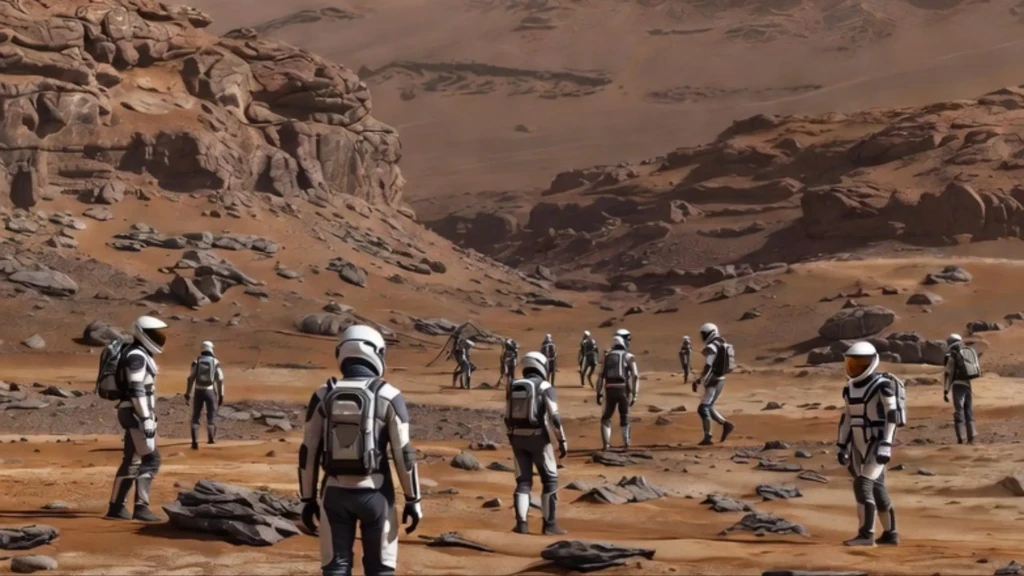
AI-generated illustration of astronauts on Mars.
SHARE

NASA astronauts who launch to Mars must look for signs of life there, says the U.S. National Academies of Sciences, Engineering and Medicine which has published a report outlining the biggest tasks. The committee was reportedly asked to identify the highest priority science objectives for crewed missions and it has come up with 11 of them, including everything from understanding the Martian geology to risks to human life. 

Titled ‘A Science Strategy for the Human Exploration of Mars’, this 240-page report is a big endorsement for human presence on Mars instead of relying on just robotic missions. This consensus by leading US scientists and engineers could provide a big boost to NASA’s Mars plans and influence exploration policies. 

NASA is currently building the Artemis Program to conquer the Moon first before shifting its focus to the red planet. 

NASA Mars Perseverance rover.
Perseverance rover on the surface of Mars. Image: NASA

Following are the 11 objectives the National Academies recommended to NASA for the crewed missions set to launch by mid-2030s.

  1. Finding evidence of past or present life in the exploration zone.
  2. Characterising water and carbon dioxide cycles (past and present) and their evolution within the exploration zone.
  3. Detailed mapping of the planet’s geology.
  4. How the Martian environment will impact crew health and how to take care of the astronauts.
  5. Determine what causes dust storms and how they evolved.
  6. Develop in-situ resource utilisation methods which could support “permanent habitation”, with water and propellants as primary focus.
  7. Study how Mars affects reproduction and genome function across plant and animal species.
  8. Study microbial population on Mars and their ‘stability” and how they can impact astronauts’ health.
  9. Determine the effects of Martian dust on humans and hardware.
  10. Study how Martian environment may influence plant and animal physiology across generations.
  11. Find out the impact of radiation on astronauts and how to minimise the risk.

ALSO READ: Neil deGrasse Tyson Shares The Only Reasons Humans May Reach Mars

NASA’s roadmap to Mars

The committee has proposed that the aforementioned objectives must be achieved across four crew campaigns to Mars. The first three involve a 30-Martian day (or sol that lasts 24 hours, 40 minutes) crew mission, followed by uncrewed flight for cargo delivery, and another 300-sol astronaut mission after that. The fourth campaign would involve sending humans to three locations, and the mission would last 30-sols.
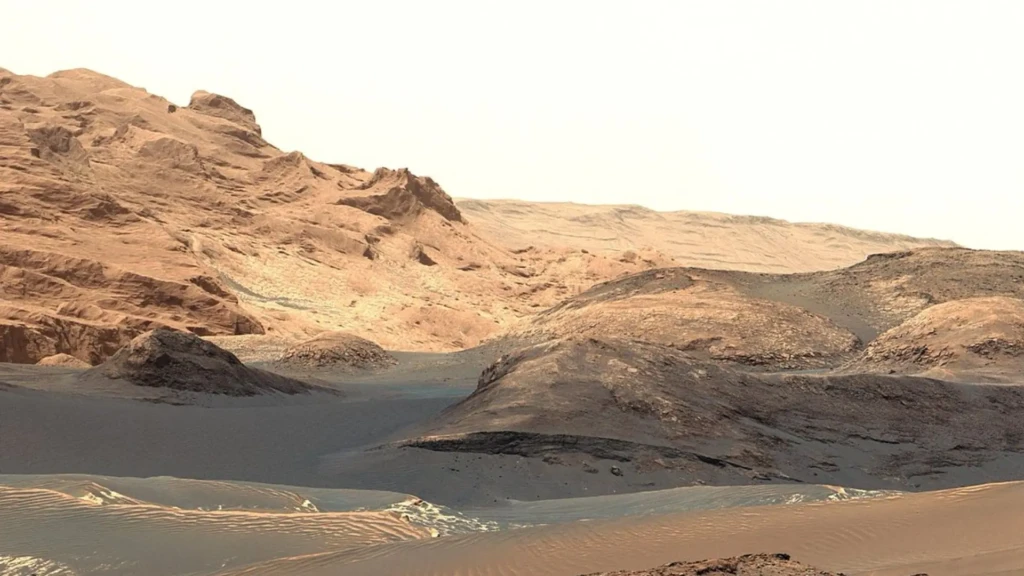
NASA Mars
Surface of Mars photographed by NASA’s Curiosity rover. Image: NASA

The missions will target “a low- to mid-latitude site with near-surface glacier ice and diverse geology” with a 100-km radius, which will enable in-situ resource utilisation – extracting water-ice and converting them into oxygen, water and propellant. This also warrants a drilling operation between 2-5 kilometres beneath the surface, where scientists suspect pockets of liquid water may be hidden.

The report also proposes setting up a science lab on Mars and send rock samples back to Earth after every mission.

It has also tackled a key point that may constrain a concerted effort to find life signs on Mars – ‘planetary protection guidelines.’ The scientists have recommended that NASA evolves the guidelines that seeks to prevent Earth-based microbes from contaminating Mars and vice-versa. “NASA should continue to collaborate on the evolution of planetary protection guidelines, with the goal of enabling human explorers to perform research in regions that could possibly support, or even harbor, life,” the report says.

ALSO READ: Mars On Earth: Why NASA Is Training Humans To Live Like Martians

TAGGED:Artemis ProgramMarsNASASpace
Share This Article
Facebook Pinterest Whatsapp Whatsapp LinkedIn Copy Link Print

Latest News

The galactic bulge by Euclid telescope. Credit: European Space Agency
This Euclid Telescope Image Of Milky Way’s Centre With 60 Million Stars May Break Your Brain
Astronomy
UFO videos shared by US government
UFO Alert! US Government Releases New Videos Of Glowing Orbs Floating In The Sky
Astronomy
NASA Artemis III crew
NASA Artemis III: Meet The Astronauts Who Will Set The Stage For 2028 Moon Landing
Artemis
NASA's MAVEN orbiter
NASA’s MAVEN Orbiter Confirmed Dead On Mars; What Did It Achieve In 11 Years?
Spaceflight

You Might Also Like

Menstruation cups
Spaceflight

Menstruation Cups May Be The Giant Leap Needed For Women’s Health In Space

December 12, 2025
Geminid meteor shower NASA
Astronomy

Geminid Meteor Shower 2025: Peak Time, How To Watch And What To Expect This Week

December 10, 2025
NASA James Webb Space Telescope
Astronomy

NASA’s Webb Telescope Discovers 13 Billion Years Old Supernova; Breaks Own Record

December 18, 2025
SpaceX Starship
Spaceflight

SpaceX Starship’s V3 Booster Damaged During Pressure Testing; Picture Surfaces

November 23, 2025
© 2026, Blue Terra Journal
  • About
  • Privacy Policy
  • Terms
  • Contact
Welcome Back!

Sign in to your account

Username or Email Address
Password

Lost your password?