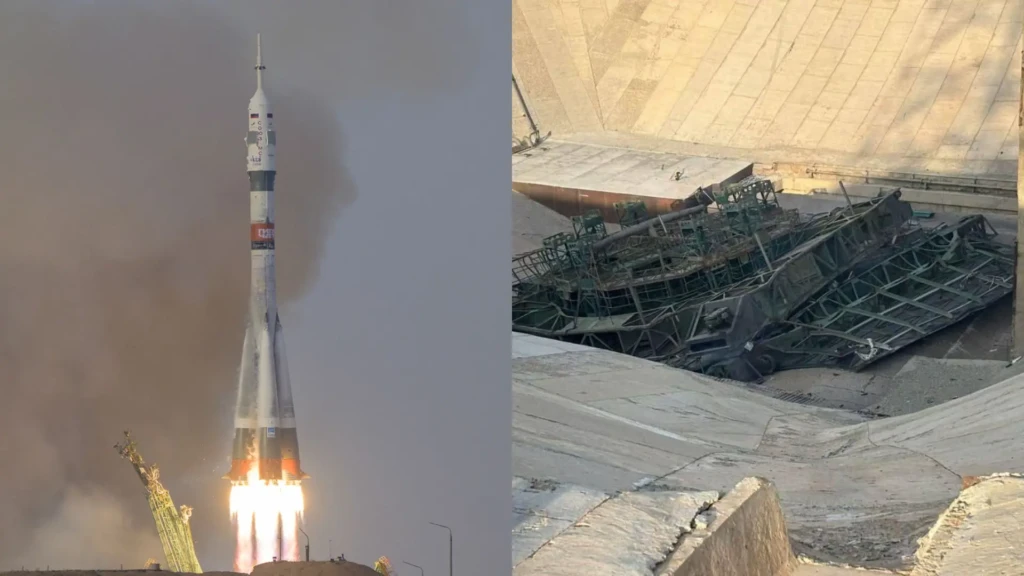
Russia has suffered a big setback in space as its primary launch pad in Baikonur, Kazakhstan is no longer fit for launching rockets. This is due to the collapse of a servicing platform after a crewed Soyuz mission launched to the International Space Station (ISS) on November 27. Several pictures from the site have surfaced on social media, with many pointing out ‘significant damage’ after the launch.
⚡️BREAKING: Russia has suddenly lost access to space
An accident at Baikonur has effectively deprived Russia of the ability to launch humans into space for the first time in 60 years.
During the launch of the Soyuz MS-28, the service tower collapsed at launch pad 31.
This is… pic.twitter.com/mGQv2c3xoh
— NEXTA (@nexta_tv) November 27, 2025
The Baikonur Cosmodrome’s 60-plus-year-old Site 31 pad was the preferred location where Russia was launching crewed missions from. Due to the damage, there is now a serious lack of resources in terms of transportation to and from low-Earth orbit. While Russia has a second launch pad in Vostochny in the far east, it is reportedly not certified for human-rated flights and has infrastructure gaps which has limited it to uncrewed missions.
Why it’s a big problem
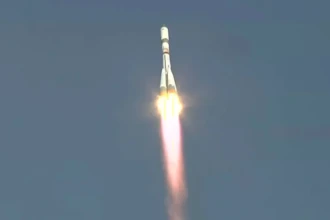
Apart from Russia’s Soyuz spacecraft, which is launched on a Soyuz rocket, astronauts of different nations rely on SpaceX for trips to and from the ISS. On November 27, the Russian space agency Roscosmos launched the MS-28 spacecraft carrying NASA astronaut Christopher Williams and two Russian cosmonauts Sergei Kud-Sverchkov and Sergei Mikayev for an eight month long mission.
⚡️⚡️Soyuz MS-28 has lifted off from the Baikonur cosmodrome
The insertion into the designated orbit, its separation from the rocket’s third stage, & the deployment of its antennas & solar panels all proceeded nominally!
Video by @roscosmos #RussiaInSpace #SpaceExploration pic.twitter.com/rCUFzA6T6z
— Russian Embassy in South Africa 🇷🇺 (@EmbassyofRussia) November 27, 2025
The NASA astronaut was part of the crew thanks to a seat-swap agreement between Russia and the US. This agreement also enables Russians to travel on SpaceX’s Dragon spacecraft from American soil. With Russia’s launch abilities crippled, SpaceX is now the only option, at least for the next few months, as a transporter to the ISS.
In case there’s an emergency and the astronauts need to return to Earth, they can either use the Dragon or Soyuz spacecraft docked at the space station. However, if, for some reason, the Soyuz capsule is compromised, Russia will be unable to launch a replacement spacecraft.
Roscosmos also sends essential supplies to the space station residents on its cargo spacecraft named Progress, which is again no longer possible. This responsibility also falls on SpaceX which uses its Cargo Dragon capsule for the job. However, NASA also has Northrop Grumman’s Cygnus spacecraft to fill in for Progress. But apart from cargo delivery, Progress is used to adjust the space station’s altitude – extremely important to keep the orbital lab afloat.
ALSO READ: Russia’s Baikonur Pad Collapses After Soyuz Launch To International Space Station
What happened at Baikonur launch pad?
The launch pad is said to have been damaged by the exhaust plume of the rocket, whose first stage generates 9,20,000 pounds of thrust during liftoff. The rocket stands on a four swing-arm that open moments before launch and its aft section has a mobile service platform beneath it, that extends and contracts, providing engineers access for pre-launch servicing [check out the video below].
This is how it looks like when the service platform is being retracted inside the “bunker”, about an hour before launch.
Video taken by Dmitry Rogozin at the Vostochny cosmodrome in 2021 pic.twitter.com/0vcI6zFgB4
— afec7032 🇷🇺 (@robert_savitsky) November 29, 2025
It’s this 20 metric ton platform that, according to reports, retracted before liftoff but wasn’t secured. This caused it to slide back out when the rocket engines fired and got blasted out of its position. Several video imagery from the site shows the platform in the flame trench where it fell after launch.
New photos of the damaged launch pad at Site 31 of Baikonur Kosmodrome were published in Telegram channels and on Novosti Kosmonavtiki forum. Sad to see it like this. pic.twitter.com/1huYN63R8T
— Katya Pavlushchenko (@katlinegrey) November 28, 2025
After the Soyuz rocket cleared the pad, Roscosmos released a statement saying – “The launch pad was inspected, as is done every time a rocket is launched. Damage to several launch pad components was identified. Damage can occur after launch, so such inspections are mandatory worldwide. The launch pad’s condition is currently being assessed.”
While Russia is downplaying the crisis, the pad’s restoration is likely to take up to two years. One of the major reasons being the Ukraine war, where the Kremlin has allocated a lot of its resources. The war has also prompted Russia to reduce the number of crew launches to ISS every two years from four to three.
ALSO READ: China’s Shenzhou-22 ‘Rescue’ Spacecraft Docks At Tiangong Space Station