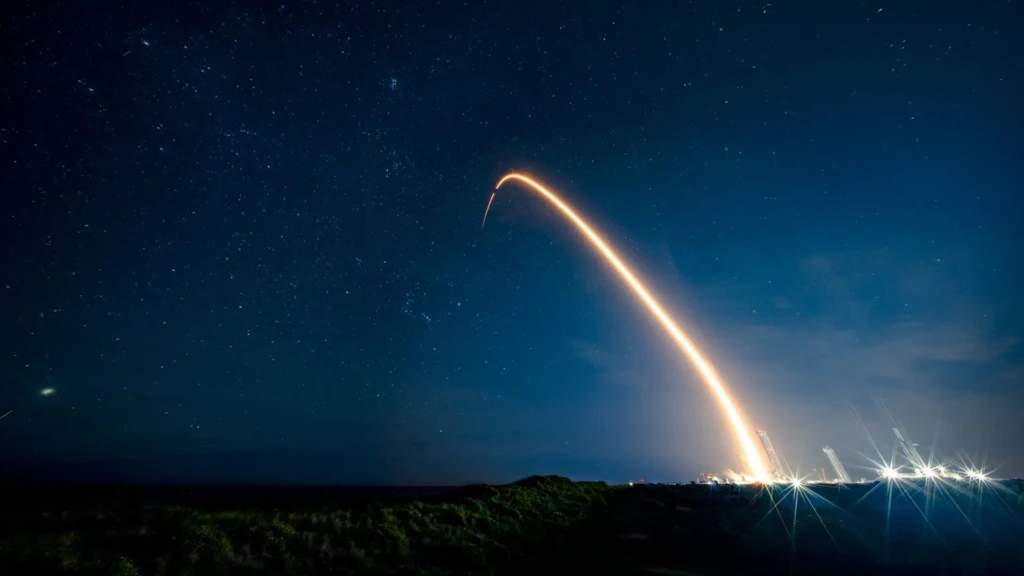
SpaceX has achieved a major milestone, completing 500 overall re-flights of an orbital class rocket. The Falcon 9 rocket lifted off at 10:51 am IST on November 17 from the Vanderberg Space Force Base carrying the ocean-mapping satellite Sentinel-6B.
“Congratulations to the SpaceX team on completing 500 (!!!!) missions with flight-proven rocket boosters,” SpaceX President and COO Gwynne Shotwell posted on X.
Liftoff! pic.twitter.com/fdINt0z4DY
— SpaceX (@SpaceX) November 17, 2025
“You’ve made the impossible possible with reusable rockets, paving the way to land huge amounts of cargo and lots of people to establish permanent human presence on the Moon and beyond with Starship!” she added referring to the world’s biggest and most powerful rocket Starship which SpaceX is building to lands humans on the Moon and Mars. Today’s mission also marked the 150th Falcon 9 launch in 2025, most of which were dedicated to SpaceX’s internet-providing Starlink satellites.
Congratulations to the SpaceX team on completing 500 (!!!!) missions with flight-proven rocket boosters. You’ve made the impossible possible with reusable rockets, paving the way to land huge amounts of cargo and lots of people to establish permanent human presence on the Moon… https://t.co/BPXHHNw84u
— Gwynne Shotwell (@Gwynne_Shotwell) November 17, 2025
About 90 minutes after launch, NASA’s Jet Propulsion Laboratory (JPL) confirmed full acquisition of signal from the Sentinel-6B satellite, installed 1,336 km above Earth, by a ground station in northern Canada. It will be taking over from Sentinel-6 Michael Freilich which was also launched by SpaceX in 2020.
ALSO READ: Neil deGrasse Tyson Shares The Only Reasons Humans May Reach Mars
The Sentinel-6B satellite
The 1,440 kg satellite is a result of collaboration between NASA, the European Space Agency (ESA), European Organisation for the Exploitation of Meteorological Satellites (EUMETSAT), and the National Oceanic and Atmospheric Administration (NOAA). Sentinel-6B is also part of the European Union’s family of Copernicus missions.
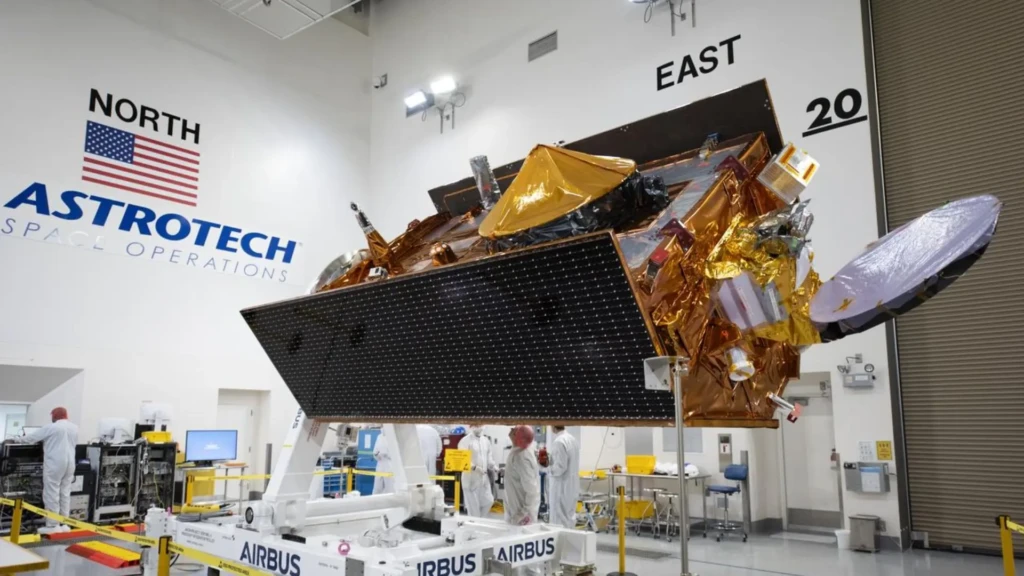
The satellite has been designed to measure sea levels of more than 90% of Earth’s ocean and provide key information about wind speeds, wave heights, atmospheric temperature, and humidity. According to JPL, Sentinel-6B will also help in forecasting marine weather, including the development of hurricanes, which intensify with warmer water.
“Sentinel-6B will collect ocean surface observations that will inform decisions critical to coastal communities, commercial shipping and fishing, national defense, and emergency preparedness and response,” Karen St. Germain, director, NASA Earth Science Division, said in a statement. Simonetta Cheli, director, ESA’s Earth Observation Programmes, further explained that the satellite will “collect the high-precision data needed to understand our changing climate, safeguard our oceans and support decisions that protect coastal communities around the world.”
ALSO READ: The Fermi Paradox: Why We’ve Never Seen Aliens