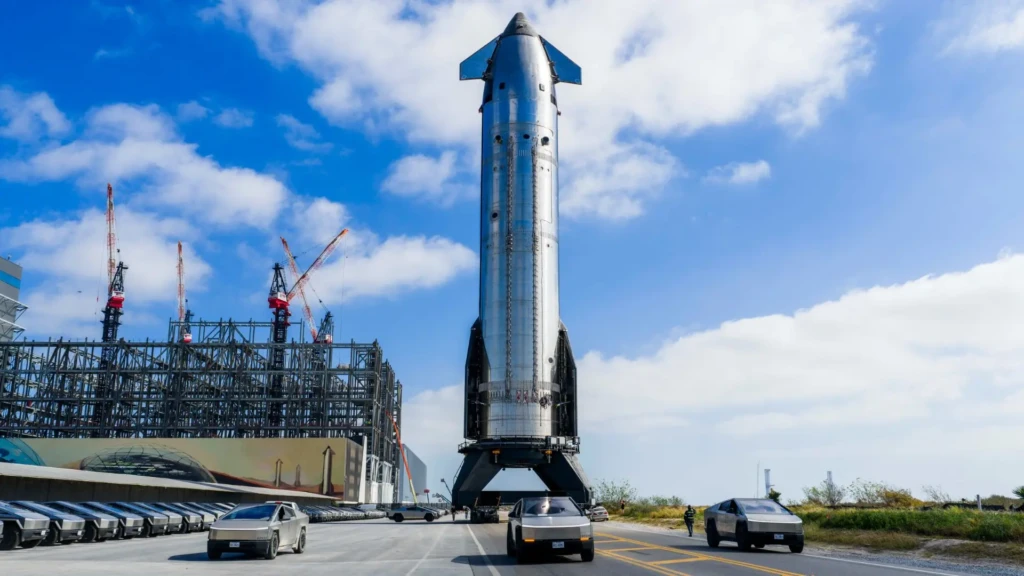
SpaceX has begun the pre-launch testing of its Starship Version 3 or V3 rocket which could fly again in March. It would be Starship’s 12th overall integrated test flight and the first of 2026. “The first Starship V3 has left the build site to begin prelaunch testing,” SpaceX posted on X with pictures of the upper stage at Starbase, Texas.
The first Starship V3 has left the build site to begin prelaunch testing pic.twitter.com/DMZVMuRQVl
— SpaceX (@SpaceX) February 26, 2026
Reacting to it, SpaceX CEO Elon Musk said that he is “highly confident that the V3 design will achieve full reusability.”
SpaceX to debut Starship V3 soon
The V2 retired in October 2025 after the immensely successful Flight 11. While SpaceX didn’t catch the rocket’s Super Heavy booster using the tower like previous missions, it achieved all major milestones between launch to splashdown.
Musk has said that the tower will catch not just the booster but also the upper stage after the latter makes two “perfect” soft landings in the ocean.
Should note that SpaceX will only try to catch the ship with the tower after two perfect soft landings in the ocean.
The risk of the ship breaking up over land needs to be very low.
— Elon Musk (@elonmusk) February 27, 2026
“The risk of the ship breaking up over land needs to be very low,” Musk wrote.
The test flight is targeted in mid-March and its success would mark a huge step toward Starship’s reusability.
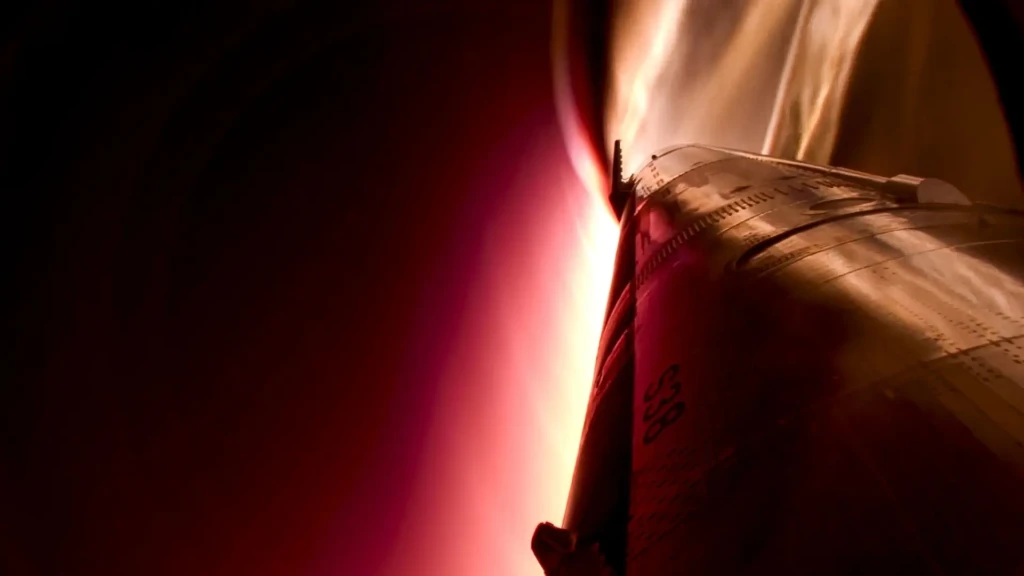
NASA has also banked on Starship to deliver astronauts to the lunar surface whereas Musk had eyes on sending humans to Mars on this vehicle.
However, earlier this month, Musk said his team has shifted its focus to building a “self-growing” city on the Moon as it is more feasible and could be achieved sooner than colonising the red planet. The billionaire said that while a lunar city could be built in 10 years, on Mars it would take more than 20.
Refuelling Starship in orbit is another monumental task ahead of SpaceX. It would require two upper stages to rendezvous in space and refuel the primary ship – something that would be extremely necessary for missions to the Moon and eventually Mars.
ALSO READ: Elon Musk Pivots From Mars To Build ‘Self-Growing’ City On The Moon – What This Means
ALSO READ: NASA Selects VAST For Sixth Private Crew Mission To International Space Station In 2027