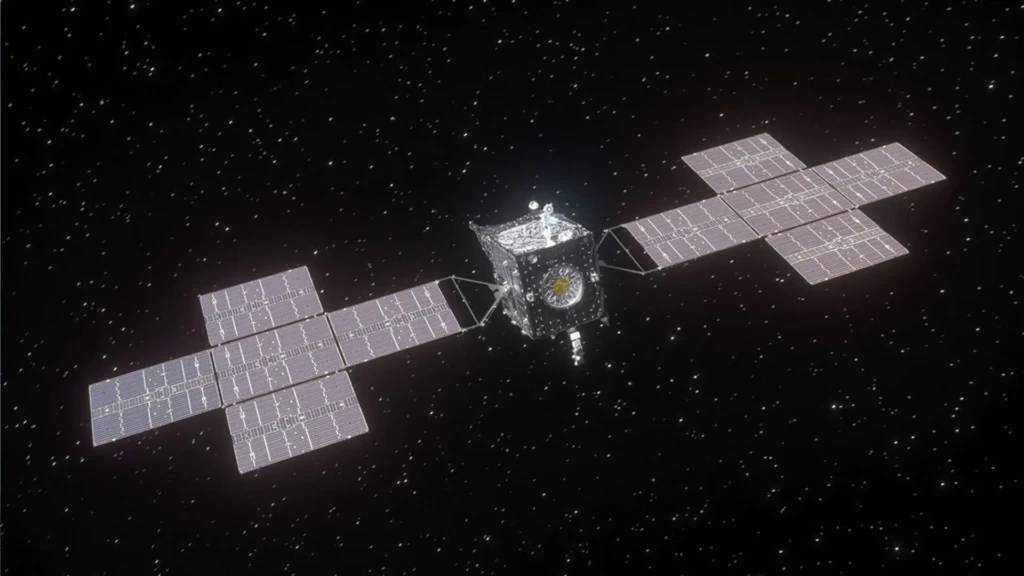
Mars is getting a new visitor today. NASA‘s Psyche spacecraft is scheduled to swing past the red planet for a gravity assist on May 15, as it heads toward a metal rich asteroid. According to NASA, the probe will be just 45,00 kilometres from the Martian surface when it flies by at 19,848 km per hour.
During the event, Psyche will utilise the gravitational pull of Mars to increase its speed and adjust its trajectory for the journey to the asteroid.
NASA’s #MissionToPsyche – on its way to explore a rare, metal-rich asteroid – is about to get a speed boost from Mars. 🚀🏁
On May 15, spacecraft will harness the Red Planet’s gravitational pull as a slingshot to increase its speed and adjust its trajectory. 1/2 pic.twitter.com/ptaVFEP2x5
— NASA JPL (@NASAJPL) May 8, 2026
“The only reason for this flyby is to get a little help from Mars to speed us up and tilt our trajectory in the direction of the asteroid Psyche,” Lindy Elkins-Tanton, principal investigator for Psyche at the University of California, Berkeley, said in a statement.
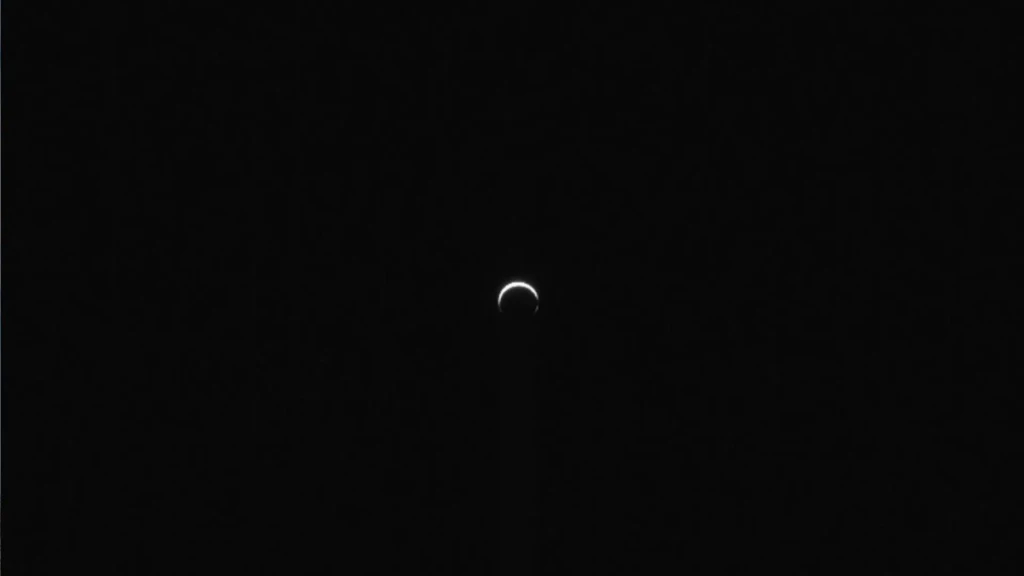
As the fly by happens, the mission team will also use Psyche’s multispectral cameras to take thousands of pictures of Mars from its day and night side and caliberate the probes instruments. The imaging process had begun with a warmup exercise on May 7 when the spacecraft was nearly five million kilometres away from the planet. The flyby preparations were underway since February 23 when mission team fired Psyche’s thrusters for 12 hours to increase its speed en route to Mars. This probe uses a solar-electric propulsion system and the inert gas xenon for propellant.
The Psyche mission was launched on October 13, 2023 to study an asteroid of the same name, which is believed to be a core of a protoplanet. Scientists say that studying it could reveal more about formation of planets, including our own, and how they evolve over time.
NASA ready for Mars flyby
Psyche is approaching Mars from its night side so the images will feature an illuminated reddish disk until it makes it to the day side. Jim Bell, the Psyche imager instrument lead at Arizona State University, however said that that both pre and post flyby phases provide great opportunities to capture invaluable pictures.
The mission team hopes to observe micrometeorites striking the surfaces of the planet’s two moons, Phobos and Deimos and conduct ‘satellite search’ observations of the space surrounding the planet. Psyche has a magnetometer onboard which is likely to detect Mars’s magnetic field redirecting charged solar particles and gather data on cosmic rays.
Psyche is expected to reach its destination in August 2029. Once it’s in the asteroid’s orbit, the probe will spend 26 months mapping and studying the asteroid’s interiors in order to discover secrets of planetary formation and evolution.
ALSO READ: NASA Shuts Down Another Voyager 1 Instrument; How Long Can This Spacecraft Last?
ALSO READ: ‘God Of Chaos’: Apophis Asteroid Will Fly Dangerously Close To Earth Exactly 5 Years From Now