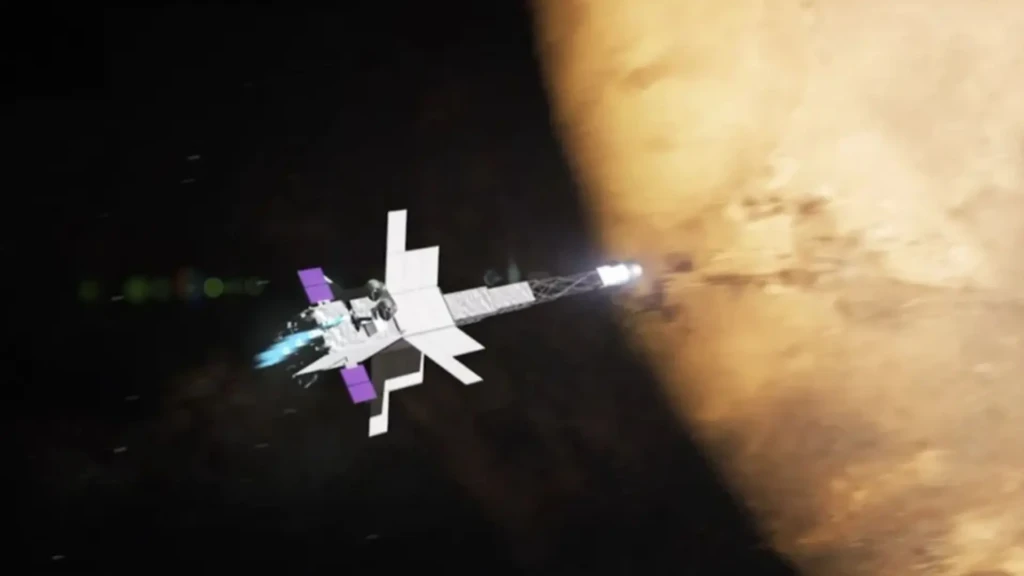
Nuclear propulsion might soon be a reality. NASA has announced the SR-1 Freedom spacecraft mission which will take off in 2028 with the world’s first nuclear reactor as a power source. Enroute to Mars, this spacecraft will deliver three tiny helicopters onto the surface of the red planet and lay the foundation of future human landings.
The SR-1 mission brings together NASA and the US Department of Energy which are also building a nuclear reactor to power bases on the Moon.
NASA is advancing nuclear power and propulsion in space to accomplish President Trump’s national space objectives.
With SR-1 Freedom, launching in 2028, we will demonstrate nuclear electric propulsion and deliver SkyFall helicopters to Mars.
In collaboration with @Energy, these… pic.twitter.com/gkGLs7xiVu
— NASA (@NASA) March 24, 2026
The concept of using nuclear propulsion in spaceflight is decades old but hasn’t been achieved yet due to several reasons including high costs, political barriers and technical challenges.
NASA says that the December 2028 launch window to Mars will force decisions for the SR-1 mission, which decades of study never did.
Why NASA wants nuclear propulsion?
Space agencies have traditionally relied on solar energy in spaceflight but it is not a reliable source. There are regions on the Moon which are under darkness for days and without continuous electricity supply, the spacecraft could go dead.
On Mars, dust storms block sunlight for weeks and could jeopardise the mission.
Long term missions need power that works everywhere, independent of the Sun – that’s where nuclear fission comes in. NASA plans to use uranium whose decay would deliver more than 20 kilowatts of electrical power and ensure continuous energy supply to the spacecraft.
The SR-1 Freedom mission
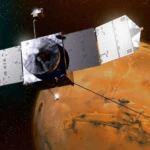
According to NASA, the SR-1 spacecraft, will start a nuclear fission reactor within 48 hours of leaving Earth’s gravity. This reactor will power the electric thrusters to help the spacecraft steer itself towards Mars. SR-1 Freedom will deliver the Skyfall payload – three Ingenuity class helicopters – equipped with cameras, ground-penetrating radar, and radios to survey potential human landing sites, search for subsurface water, and relay navigation data for future landers.
NASA believes that the SR-1 mission will enable the Lunar Reactor-1 (LR-1), a fission surface-power system designed to keep the Moon Base operating through periods of darkness.
Speaking about SR-1, NASA Administrator Jared Isaacman said – “This mission will bring America’s nuclear power capabilities to space and deliver the Skyfall payload of Ingenuity class helicopters to explore the Red Planet. Nuclear power and propulsion will be the key to undertaking crewed missions to Mars and exploring the outer solar system.”
ALSO READ: NASA Moon Base: How The US Will Spend $20 Billion On This Ambitious Project
ALSO READ: Video Captures 1-Ton Meteor Exploding Over Houston Skies, NASA Releases Statement