Blue Terra Journal

  • Home
  • Spaceflight
    SpaceflightShow More
    NASA's SR-1 Freedom spacecraft.
    What Is NASA’s SR-1 Freedom Mission? The First Nuclear Reactor In Space Explained
    March 27, 2026
    Artist's impression of a NASA Moon base.
    NASA Moon Base: How The US Will Spend $20 Billion On This Ambitious Project
    March 25, 2026
    Russia's Soyuz rocket ascending to space.
    Russia’s Progress Spacecraft Suffers Mystery Glitch On Its Way To ISS; What Happened?
    March 23, 2026
    Robert Goddard
    Celebrating Robert Goddard – The Man Who Changed Rocketry 100 Years Ago
    March 17, 2026
    International Space Station gets extension to beat China
    Watch Out China! US Proposes Extending International Space Station Lifespan To 2032
    March 10, 2026
  • Astronomy
    AstronomyShow More
    Meteor spotted over Houston.
    Video Captures 1-Ton Meteor Exploding Over Houston Skies, NASA Releases Statement
    March 22, 2026
    NASA black hole simulation
    Fall Into A Black Hole With This Incredibly Scary Simulation Made By NASA
    March 18, 2026
    Comet C/2026 A1 MAPS
    Comet C/2026 A1 MAPS: What Are ‘Sun-Grazer’ Comets And Why Are They Special?
    March 12, 2026
    Moon is safe from asteroid 2024 YR4.
    The Moon Is Safe! James Webb Space Telescope Rules Out Asteroid 2024 YR4’s Collision
    March 6, 2026
    NASA Moon orbiter
    NASA Prepares To Save Its Orbiter During Total Solar Eclipse On The Moon
    March 3, 2026
  • India
    IndiaShow More
    Shubhanshu Shukla aboard the ISS.
    ISRO Astronaut Shubhanshu Shukla Awarded Ashoka Chakra For Heroic Ax-4 Mission
    February 9, 2026
    ISRO's PSLV lifts off to space.
    ISRO’s PSLV Rocket Suffers Third Stage Failure After Successful Liftoff; Payloads Lost
    January 23, 2026
    Dhruva Space team at ISRO facility.
    India’s Dhruva Space To Launch 10 Missions, Including 1st Northeastern Satellite, On ISRO’s PSLV
    January 12, 2026
    ISRO's PSLV rocket
    ISRO To Seek Redemption With PSLV-C62 Mission Launch On January 12
    January 12, 2026
    ISRO SSLV
    ISRO’s SSLV Rocket Just Got Better After Latest Third Stage Test Fire
    December 31, 2025
  • Artemis
    ArtemisShow More
    NASA Artemis II crew
    NASA’s Christina Koch Turns ‘Space Plumber’ To Fix $30 Million Toilet On Artemis II Mission
    April 3, 2026
    NASA Orion spacecraft
    NASA’s Artemis II Astronauts Are Moon-Bound After Successful Trans-Lunar Injection Burn
    April 3, 2026
    NASA Artemis II lifts off.
    Artemis II Lifts Off! NASA Launches 4 Astronauts To The Moon After Over 50 Years
    April 2, 2026
    NASA's Artemis II astronauts
    NASA Artemis II Launch Live: Watch Humanity Return To The Moon On April 2
    April 2, 2026
    NASA Apollo 8 image
    NASA Artemis II: Why This Moon Mission Is Our Generation’s Apollo 8
    March 30, 2026
  • More
    • About
    • Privacy Policy
    • Terms
    • Contact

Blue Terra Journal

  • Home
  • Spaceflight
  • Astronomy
  • India
  • Artemis
Search
  • Pages
    • About
    • Contact
    • Privacy Policy
    • Terms

Home - Astronomy - Why Are Comet 3I/ATLAS Images Released By NASA So Blurry?

Astronomy

Why Are Comet 3I/ATLAS Images Released By NASA So Blurry?

It's still a monumental achievement.

Harsh Vardhan
Last updated: November 23, 2025 8:08 PM
Harsh Vardhan
Share
4 Min Read
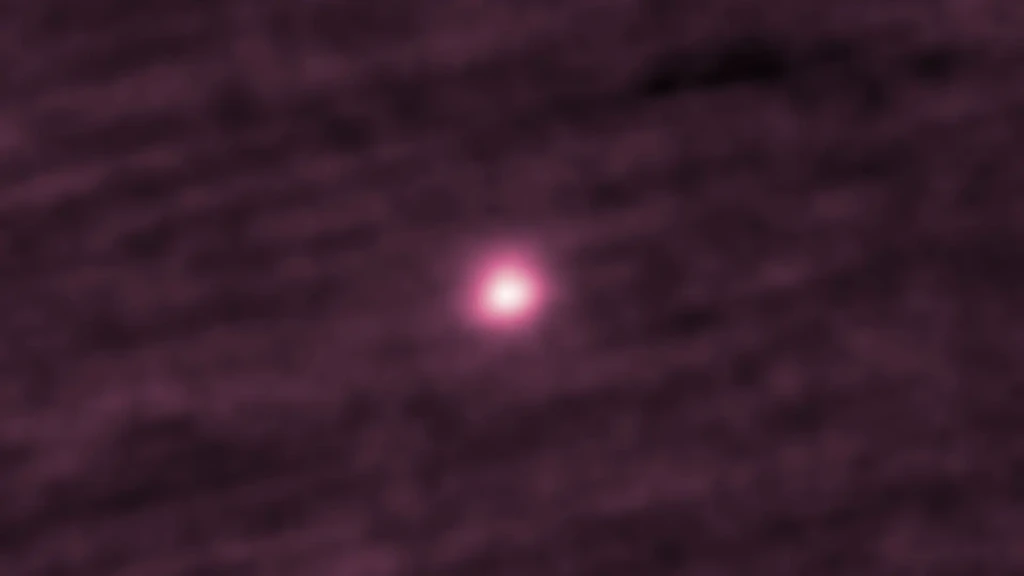
Comet 3I/ATLAS captured by Lucy probe.
Comet 3I/ATLAS captured by Lucy spacecraft. Image: NASA
SHARE

NASA recently released the much-awaited images of the comet 3I/ATLAS, and many among the public were dissatisfied with the picture quality. Several social media users across platforms questioned why NASA couldn’t take better images when amateur astronomers are able to provide better views of this interstellar visitor. Here’s why these pictures don’t seem up to the mark but they are a monumental achievement.

❓Why so blurry❓

Lots of reasons…but in short, it’s not what these spacecraft were designed to do. As comet 3I/ATLAS swooped by, we jumped on the opportunity to turn our instruments its way and see what we could get. Take HiRISE as an example.👇

The left is what it was… pic.twitter.com/A5NuecHYWb

— NASA Solar System (@NASASolarSystem) November 20, 2025

Why NASA’s 3I/ATLAS images look blurry?

Before you get mad over the quality, you must understand that NASA is not primarily using traditional telescopes with large mirrors to take pictures of 3I/ATLAS. The  images were captured by multiple spacecraft and satellites currently in space which turned their cameras, meant to observe closer objects, to photograph the comet. Imaging fast-moving and dim objects is not what they’re designed to do.

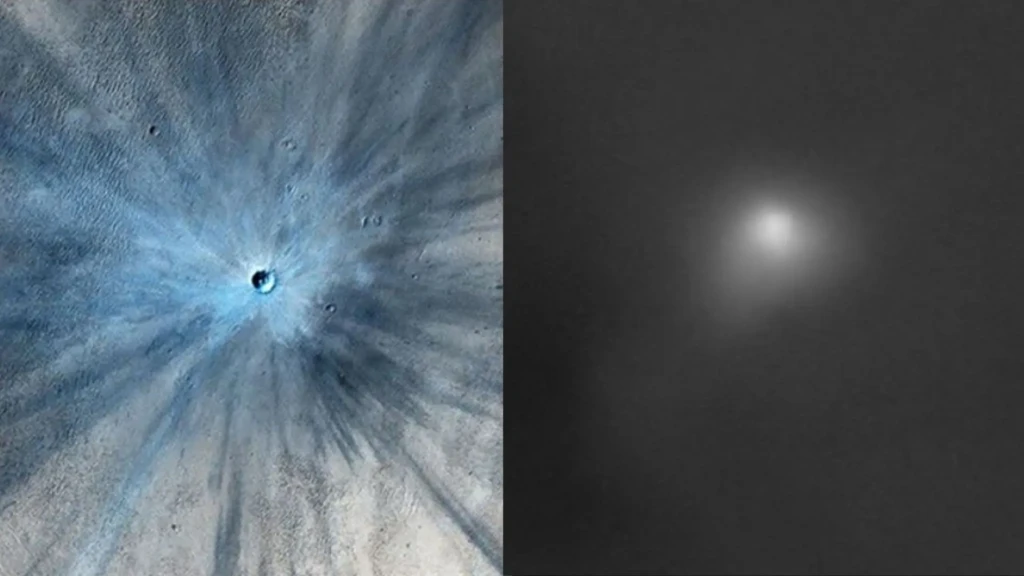
Take the Mars Reconnaissance Orbiter (MRO) for example, which used its HiRISE camera to snap the comet. The image below on the left shows what this camera is capable of – photographing the surface of Mars which is bright, close, and stable. On the other hand, there’s 3I/ATLAS on the right which was around 30 million km away from Mars and moving at a speed of over 2,50,000 km per hour.
NASA 3I/ATLAS
Photo of Mars surface captured by the MRO (left) vs 3I/ATLAS (right). Image: NASA
NASA Comet 3I/ATLAS
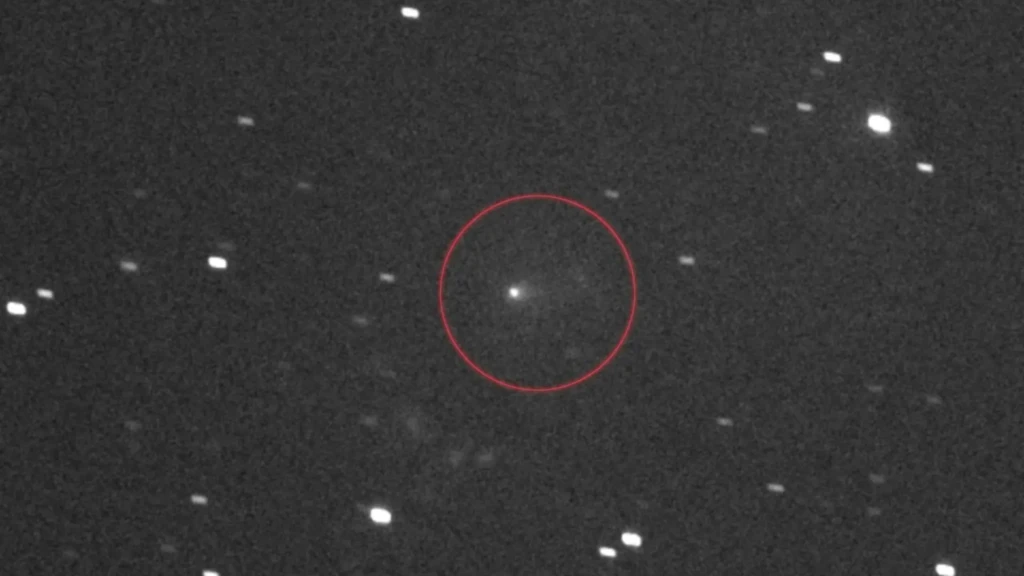
The Psyche spacecraft’s view of the Comet 3I/ATLAS. Image: NASA
Comet 3I/ATLAS
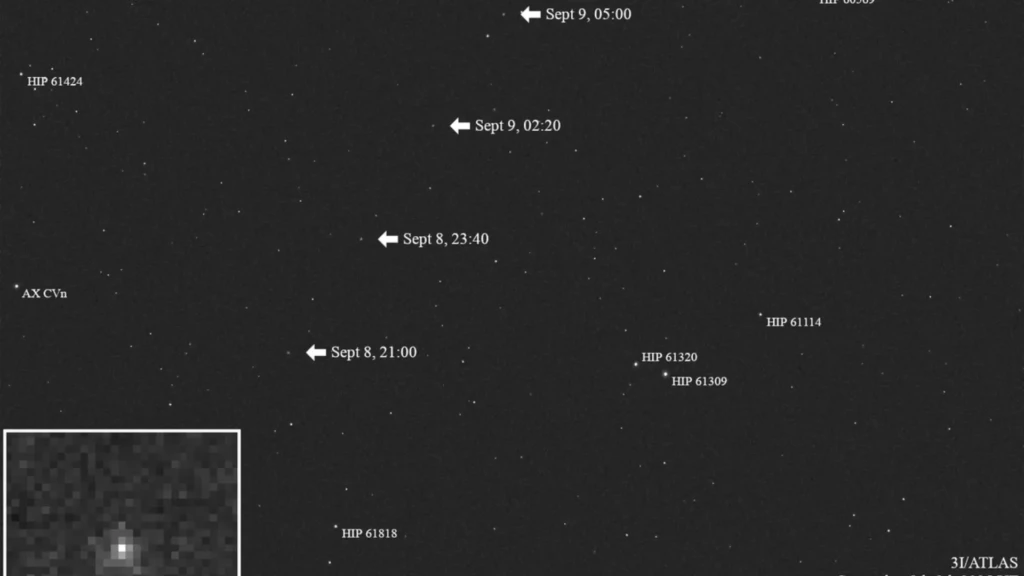
Comet 3I/ATLAS photographed by STEREO-A telescope. Image: NASA

Similarly, the Psyche spacecraft which is on its way to study a metal-rich asteroid of the same name was 53 million km away from 3I/ATLAS whereas the Lucy spacecraft, meant to explore Jupiter’s trojan asteroids, was around 386 million km. Ground-based telescopes will surpass these spacecraft in terms of quality because they have larger mirrors that gather more light, producing images of faint objects with higher resolution.

The photo release was delayed due to the US government shutdown, and now that it’s over, NASA is leading an unprecedented observation campaign to study 3I/ATLAS using every major observatory in space.

The recently released pictures were captured by the MRO, Psyche, Lucy, SOHO, STEREO-A, TESS, the Mars Perseverance rover and MAVEN orbiter. Soon after the comet’s discovery on July 1, NASA had also used space telescopes like Hubble, James Webb and SPHEREx to gather data. The comet will make its closest approach to Earth on December 19 and we can expect much better pictures when that happens. 

ALSO READ: Harvard Physicist Avi Loeb Criticises NASA’s Comet 3I/ATLAS Photo Release

ALSO READ: What Are Interstellar Comets And What Makes Them Special?

TAGGED:3I/ATLASComet 3I/ATLASNASA
Share This Article
Facebook Pinterest Whatsapp Whatsapp LinkedIn Copy Link Print

Latest News

NASA Artemis II crew
NASA’s Christina Koch Turns ‘Space Plumber’ To Fix $30 Million Toilet On Artemis II Mission
Artemis
NASA Orion spacecraft
NASA’s Artemis II Astronauts Are Moon-Bound After Successful Trans-Lunar Injection Burn
Artemis
NASA Artemis II lifts off.
Artemis II Lifts Off! NASA Launches 4 Astronauts To The Moon After Over 50 Years
Artemis
NASA's Artemis II astronauts
NASA Artemis II Launch Live: Watch Humanity Return To The Moon On April 2
Artemis

You Might Also Like

Blue Origin's New Glenn rocket.
Spaceflight

Blue Origin Scrubs New Glenn’s Launch For NASA ESCAPADE Mars Mission

November 11, 2025
image 4 1
India

How Gaganyaan Delays Are Setting India Back In Modern Space Race

November 19, 2025
Comet C/2026 A1
Astronomy

A New Comet Is Set To Dive Into The Sun And May Be Visible During The Day

March 11, 2026
NASA's Artemis II crew.
Artemis

NASA’s Artemis II Crewed Moon Mission May Launch On Feb 8 – All The Records It Will Set

February 3, 2026
© 2026, Blue Terra Journal
  • About
  • Privacy Policy
  • Terms
  • Contact
Welcome Back!

Sign in to your account

Username or Email Address
Password

Lost your password?