Blue Terra Journal

  • Home
  • Spaceflight
    SpaceflightShow More
    SpaceX Starship
    SpaceX Starship’s 12th Test Flight Targeted On May 20; No Booster Catch This Time
    May 13, 2026
    SpaceX's Starship during launch rehearsal.
    SpaceX Completes Starship’s Launch Rehearsal For Flight 12 This Week; What To Expect?
    May 13, 2026
    China US rivalry reach new heights.
    ‘Rival’ China Is Unintentionally The Biggest Motivator For NASA’s Moon Ambitions
    April 28, 2026
    NASA Voyager 1 illustration
    NASA Shuts Down Another Voyager 1 Instrument; How Long Can This Spacecraft Last?
    April 22, 2026
    NASA's SR-1 Freedom spacecraft.
    What Is NASA’s SR-1 Freedom Mission? The First Nuclear Reactor In Space Explained
    March 27, 2026
  • Astronomy
    AstronomyShow More
    Artist's impression of NASA's Psyche spacecraft.
    NASA’s Psyche Spacecraft Will Zoom Past Mars Today On Its Way To Metal-Rich Asteroid
    May 15, 2026
    Comet MAPS image
    Video: Comet MAPS destroyed after plunging into the Sun; event caught by NASA missions
    April 18, 2026
    Apophis asteroid flyby
    ‘God Of Chaos’: Apophis Asteroid Will Fly Dangerously Close To Earth Exactly 5 Years From Now
    April 14, 2026
    Meteor spotted over Houston.
    Video Captures 1-Ton Meteor Exploding Over Houston Skies, NASA Releases Statement
    March 22, 2026
    NASA black hole simulation
    Fall Into A Black Hole With This Incredibly Scary Simulation Made By NASA
    March 18, 2026
  • India
    IndiaShow More
    Shubhanshu Shukla aboard the ISS.
    ISRO Astronaut Shubhanshu Shukla Awarded Ashoka Chakra For Heroic Ax-4 Mission
    February 9, 2026
    ISRO's PSLV lifts off to space.
    ISRO’s PSLV Rocket Suffers Third Stage Failure After Successful Liftoff; Payloads Lost
    January 23, 2026
    Dhruva Space team at ISRO facility.
    India’s Dhruva Space To Launch 10 Missions, Including 1st Northeastern Satellite, On ISRO’s PSLV
    January 12, 2026
    ISRO's PSLV rocket
    ISRO To Seek Redemption With PSLV-C62 Mission Launch On January 12
    January 12, 2026
    ISRO SSLV
    ISRO’s SSLV Rocket Just Got Better After Latest Third Stage Test Fire
    December 31, 2025
  • Artemis
    ArtemisShow More
    NASA Artemis II mission
    Welcome Home! NASA’s Artemis II Astronauts Are Back After Historic Moon Voyage
    April 22, 2026
    NASA Artemis II iPhone image
    iPhones Reigned Supreme On NASA’s Artemis II Moon Mission
    April 10, 2026
    Artemis II NASA
    All Eyes On Scary Artemis II Reentry As NASA Moon Mission Nears Completion
    April 9, 2026
    NASA Artemis II
    NASA Artemis II Crew Names Moon Crater ‘Carroll’ After Commander Reid Wiseman’s Late Wife
    April 7, 2026
    NASA Artemis II
    Watch: NASA Artemis II Astronauts Begin Flyby Of Moon’s Far Side For The First Time Ever
    April 9, 2026
  • More
    • About
    • Privacy Policy
    • Terms
    • Contact

Blue Terra Journal

  • Home
  • Spaceflight
  • Astronomy
  • India
  • Artemis
Search
  • Pages
    • About
    • Contact
    • Privacy Policy
    • Terms

Home - Astronomy - Comet 3I/ATLAS Live Tracking: How To Keep An Eye On This Interstellar Visitor?

Astronomy

Comet 3I/ATLAS Live Tracking: How To Keep An Eye On This Interstellar Visitor?

The comet is exiting the inner solar system.

Abhishek Raval
Last updated: January 5, 2026 1:34 PM
Abhishek Raval
Share
4 Min Read
Comet 3I/ATLAS
Comet 3I/ATLAS photographed in July, 2025. Image: European Southern Observatory
SHARE


Contents
  • How to track 3I/ATLAS live?
  • NASA’s observation campaign
  • 3I/ATLAS size and speed

The comet 3I/ATLAS is exiting our inner solar system and you can track it live thanks to NASA. Discovered by the NASA-funded Asteroid Terrestrial-impact Last Alert System (ATLAS) telescope network, 3I/ATLAS is the third ever interstellar object to visit the solar system after Oumuamua (2017)  and Borisov (2019). 

As the ATLAS survey network in Río Hurtado, Chile, was scanning through the sky, it identified a hazy small heavenly body travelling at an unusually fast speed on July 1. This wasn’t just any native asteroid or comet because its orbit was too steep and the speed was also too high (about 60 km/second). Besides, it did not follow a closed orbital path about the Sun. That ‘hyperbolic trajectory’ is what gave away its identity.

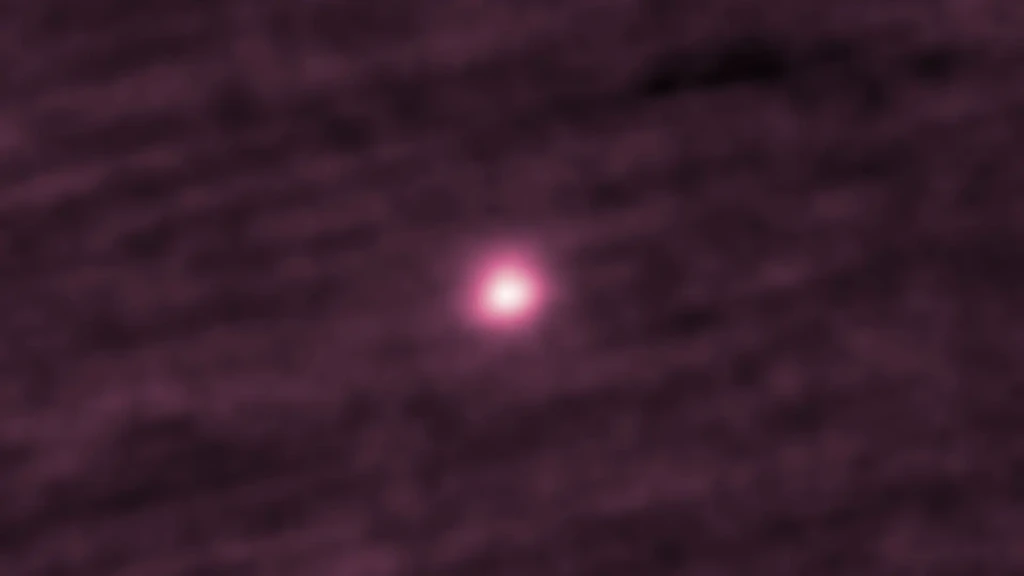
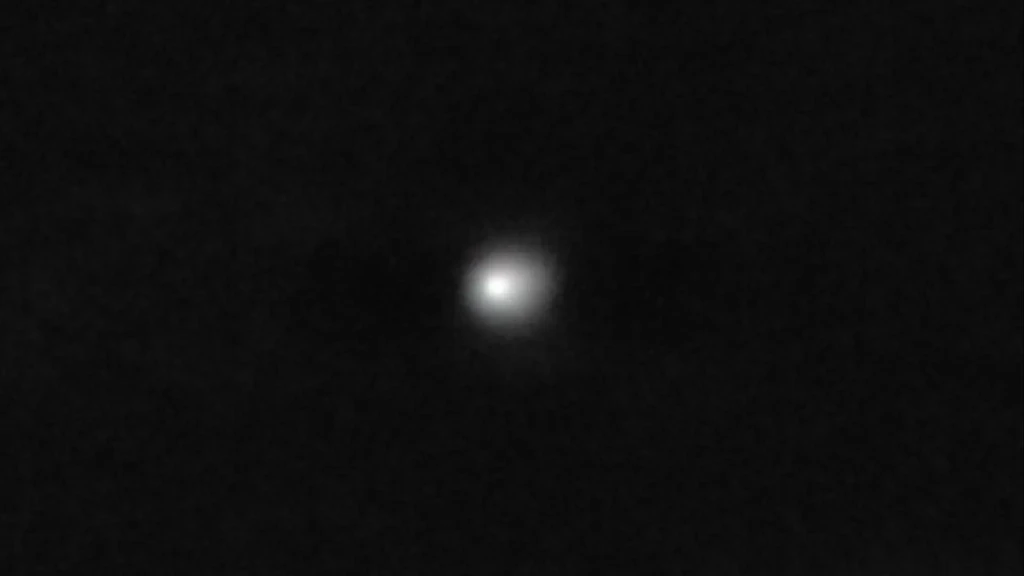
On December 20, NASA released new pictures of this icy visitor captured by various spacecraft around Mars and beyond. 

How to track 3I/ATLAS live?

Yes! You can follow comet 3I/ATLAS as it speeds through the solar system. Here’s how:

While it’s not visible to the naked eye, you can track its real-time path using @NASA’s interactive tool, Eyes on the Solar System.

🔗: https://t.co/kV5kQEThkF pic.twitter.com/26yAb97k4K

— NASA Science (@NASAScience_) November 19, 2025

The comet reached perihelion (closest point to the Sun) on October 30 and is currently cruising on its hyperbolic trajectory out of the solar system. It is estimated to make its closest approach to Earth on December 19 and you can track its live location using NASA’s interactive tool Eyes on the Solar System that keeps eyes on every major object – asteroids, comets and spacecraft – in our solar neighbourhood.  

NASA’s observation campaign

NASA has placed multiple eyes in the sky to observe the interstellar object, perhaps at a scale never seen before. During a live press conference earlier today, the agency shared pictures captured by the Mars Reconnaissance Orbiter, SPHEREx telescope, the Solar and Heliospheric Observatory (SOHO), the Psyche spacecraft, exoplanet-hunter TESS, the STEREO-A telescope, Lucy spacecraft and Mars Perseverance rover. 
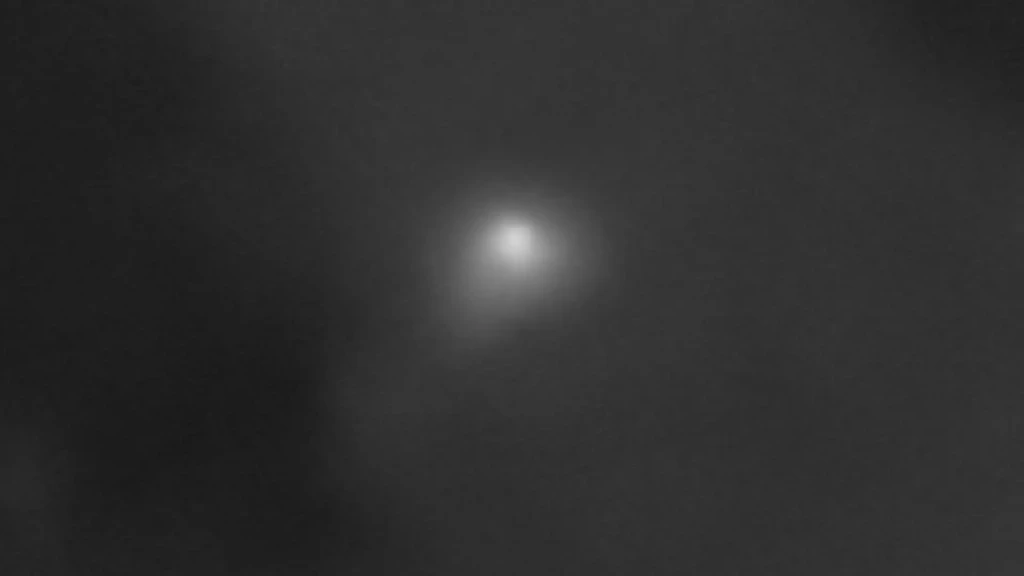
NASA Comet 3I/ATLAS
Comet 3I/ATLAS captured by the Mars Reconnaissance Orbiter. Image: NASA
Comet 3I/ATLAS
Comet 3I/ATLAS photographed by STEREO-A telescope. Image: NASA

Explaning the need for attention and investment into studying it, NASA said, “By observing the comet from so many locations, NASA has an opportunity to learn about the ways that 3I/ATLAS differs from our solar system’s home-grown comets and give scientists a new window into how the compositions of other systems may differ from.”

ALSO READ: ISRO Shares Picture Of Comet 3I/ATLAS Captured By Indian Telescope

3I/ATLAS size and speed

This comet has some very interesting characteristics. When it was first spotted, 3I/ATLAS was travelling at a speed of 137,000 miles per hour (221,000 km per hour). As the Sun pulled the comet inward, it changed gear and its speed increased to about 153,000 miles per hour (246,000 km per hour) during perihelion. When 3I/ATLAS leaves our solar system, NASA says, it will travel at the same speed as it came in.

NASA’s Hubble Space Telescope observed the interstellar comet on August 20 and astronomers have based its size on the findings from the telescope. The estimated diameter of 3I/ATLAS’ nucleus is no less than 1,400 feet (440 meters) and no greater than 3.5 miles (5.6 km). In comparison, 1I/ʻOumuamua’s size was between 100 to 440 m, and 2I/Borisov was almost 1 km wide.

ALSO READ: NASA Finally Releases Comet 3I/ATLAS Images Captured From Mars & Beyond

TAGGED:3I/ATLAScometComet 3I/ATLASNASASpace
Share This Article
Facebook Pinterest Whatsapp Whatsapp LinkedIn Copy Link Print

Latest News

Artist's impression of NASA's Psyche spacecraft.
NASA’s Psyche Spacecraft Will Zoom Past Mars Today On Its Way To Metal-Rich Asteroid
Astronomy
SpaceX Starship
SpaceX Starship’s 12th Test Flight Targeted On May 20; No Booster Catch This Time
Spaceflight
SpaceX's Starship during launch rehearsal.
SpaceX Completes Starship’s Launch Rehearsal For Flight 12 This Week; What To Expect?
Spaceflight
China US rivalry reach new heights.
‘Rival’ China Is Unintentionally The Biggest Motivator For NASA’s Moon Ambitions
Spaceflight

You Might Also Like

SpaceX Dragon spacecraft for NASA's Crew-12 mission.
Spaceflight

SpaceX Rolls Out Dragon Spacecraft For NASA’s Crew-12 Mission While Falcon 9 Remains Grounded

February 4, 2026
NASA Russia MS-27
Spaceflight

LIVE: NASA and Russian Astronauts To Depart From International Space Station On Dec 9

December 9, 2025
Solar Storm
Astronomy

Strongest Solar Eruption Of 2025 Lights Up Skies With Auroras, Triggers Blackouts

November 12, 2025
NASA Boeing mission astronauts
Spaceflight

NASA Admits Mistake, Designates Boeing’s Crew Mission ‘Type A’ Mishap

March 21, 2026
© 2026, Blue Terra Journal
  • About
  • Privacy Policy
  • Terms
  • Contact
Welcome Back!

Sign in to your account

Username or Email Address
Password

Lost your password?