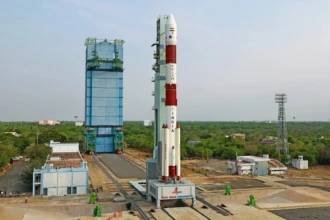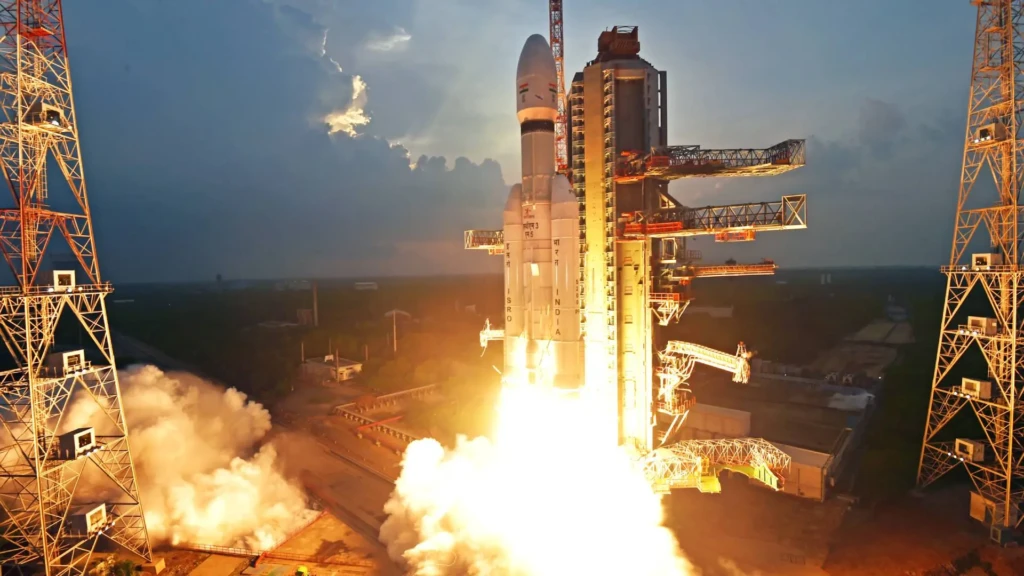
In a major boost to national security and attaining Aatmanirbharta in defence, the Indian Space Research Organisation’s (ISRO) LVM3 M5 rocket on November 2, successfully launched the heaviest satellite from Indian soil. The CMS-03 communication satellite will empower the Indian navy with comprehensive capabilities to securely and seamlessly communicate across the high seas.
“This satellite is India’s heaviest communication satellite to date, weighing approximately more than 4,400 kg, and includes many indigenous state-of-the-art components developed specifically to meet the Indian Navy’s operational requirements,” the Indian Navy said, as reported by ANI.
Experience #LVM3M5’s mission milestones. Watch the liftoff video and the onboard camera video capturing its ascent from launch to orbit. pic.twitter.com/1jp2G9TyYV
— ISRO (@isro) November 2, 2025
The LVM3 M5 a.k.a ‘Bahubali’ is India’s heaviest rocket. The historic Chandrayaan-3 mission also lifted off aboard Bahubali and with the current launch, the rocket has proved successful in all of its 8 missions. The CMS-03 satellite will continue to provide services for 15 years. “CMS-03, weighing about 4,400kg, will be the heaviest communication satellite to be launched to Geosynchronous Transfer Orbit (GTO) from Indian soil. The previous mission of LVM3 launched the Chandrayaan-3 mission, in which India became the first country to land successfully near the lunar south pole,” ISRO said in a statement.
#AatmanirbharBharat takes another leap! #ISRO is set to launch GSAT-7R, #IndianNavy’s most advanced indigenously developed communication satellite, today from Sriharikota.
A testament to our commitment to safeguarding maritime interests with cutting-edge Indian technology.… https://t.co/J18i2oOmF8
— SpokespersonNavy (@indiannavy) November 2, 2025
The Cryogenic Engine Reignition Milestone
Apart from the achievement of launching the heaviest satellite using the LVM3 M5 (Bahubali) rocket, ISRO notched up yet another milestone during the mission. It successfully conducted an experiment that will prove to be a force multiplier in enhancing the productivity of future space missions. The space agency for the first time in its history, re-ignited the CE-20 cryogenic engine in-flight of the C25 upper stage after placing the CMS-03 satellite in orbit. Why is this important ?
Dr V Narayanan, Chairman, ISRO explained addressing the audience at ISRO, who witnessed the mission, “I would like to announce an important experiment that we have carried out. The indigenously developed C25 cryogenic stage for the first time, we have successfully injected the satellite in the orbit and reorienting the stage, we have reignited the thrust chamber. This is going to be a great experiment which is going to feed data for restarting the creating stage in the future for enabling the mission flexibility for placing multiple satellites in various orbits using the Bahubali rocket LVM3.”
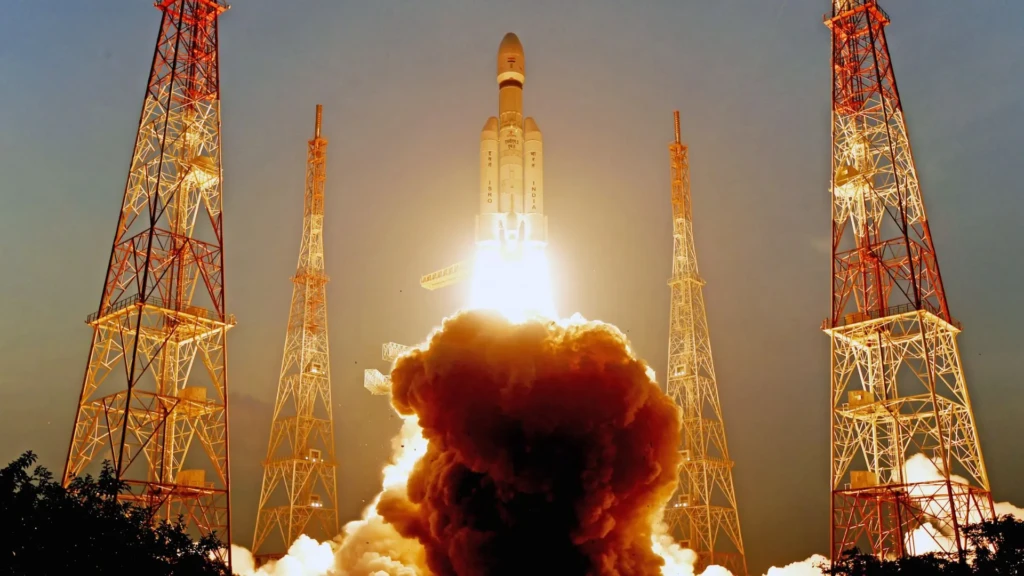
The Cryogenic engine re-ignition after it is shut off post the satellite injection is a challenging task said M. Mohan, Director, Liquid Propulsion Systems Centre, (LPSC). Addressing the audience post the launch, he said – “When we have the cryogenic ignition initially and the entire 700 seconds of functioning was completed to come to the satellite injection, the cryogenic stage was shut down and the satellite was injected. As an experiment we have reignited the engine in a very difficult ignition conditions of a hard vacuum and that was also successfully demonstrated by the change in acceleration. The experiment is going to give us a lot of confidence in the future to proceed with flexible mission programs.”
ALSO READ: ISRO Completes Parachute Air Drop Test Of Gaganyaan Crew Module | Video
Capturing Market Share in Commercial Space Launches
The In-flight Cryogenic engine reignition capability acquisition will also prove influential for ISRO in the commercial space launch market. As it enables the injection of multiple satellites in different orbits. According to Future Market Insights, the commercial space launch market is projected to grow to US $36.7 billion by 2035. ISRO Chairman in an interview with PTI said ISRO aims to gain 8 to 10 percent share of the commercial space market, which is currently less than 2 percent.
India has now entered a select club of nations to have demonstrated in-flight Cryogenic upper stage reignition. Some of the other countries include the USA, China, Russia, Japan and Europe.
The Nambi Effect
It’s pertinent to note, the seed of the crucial Cryogenic engine technology in India was sown by the Indian Aerospace scientist Nambi Narayanan. In the early 1990s, under his leadership India struck a Cryogenic engine project deal with the Soviet Union for a technology transfer. However, after the US objection citing India could use the technology to develop missiles and the false espionage case levelled against Padma Bhushan Narayanan, the deal was derailed.
Narayanan headed the Cryogenic division at ISRO and made considerable progress in developing the liquid propulsion technology, a major component to power launch rockets. He developed the ‘Vikas’ engine for ISRO’s launch vehicles, which were also used for the Mangalyaan and Chandrayaan missions.
ALSO READ: How Gaganyaan Delays Are Setting India Back In Modern Space Race