In early February, the University of Sydney announced a major breakthrough. One of their students had manufactured space dust in lab from scratch – a feat never achieved before. This achievement is as big as it sounds because scientists believe the results are shedding new light on how the chemical building blocks of life may have formed before Earth’s birth.
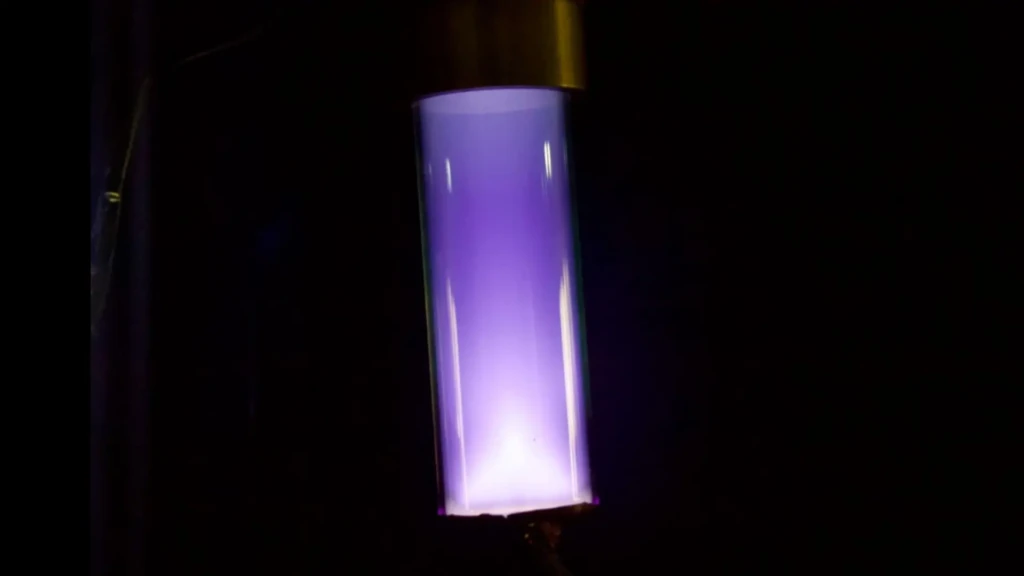
The credit for this milestone goes to Linda Losurdo, a PhD candidate in materials and plasma physics in the School of Physics, who mixed nitrogen, carbon dioxide and acetylene in a tube, mimicking the harsh and dynamic environments around stars and supernova remnants. These gases were then subjected to intense electric energy – 10,000 volts for an hour – which produced a type of plasma called glow discharge. Under this intense electrical potential, the plasma molecules broke down and eventually settled as a thin dust layer on silicon chips placed inside the tubes.
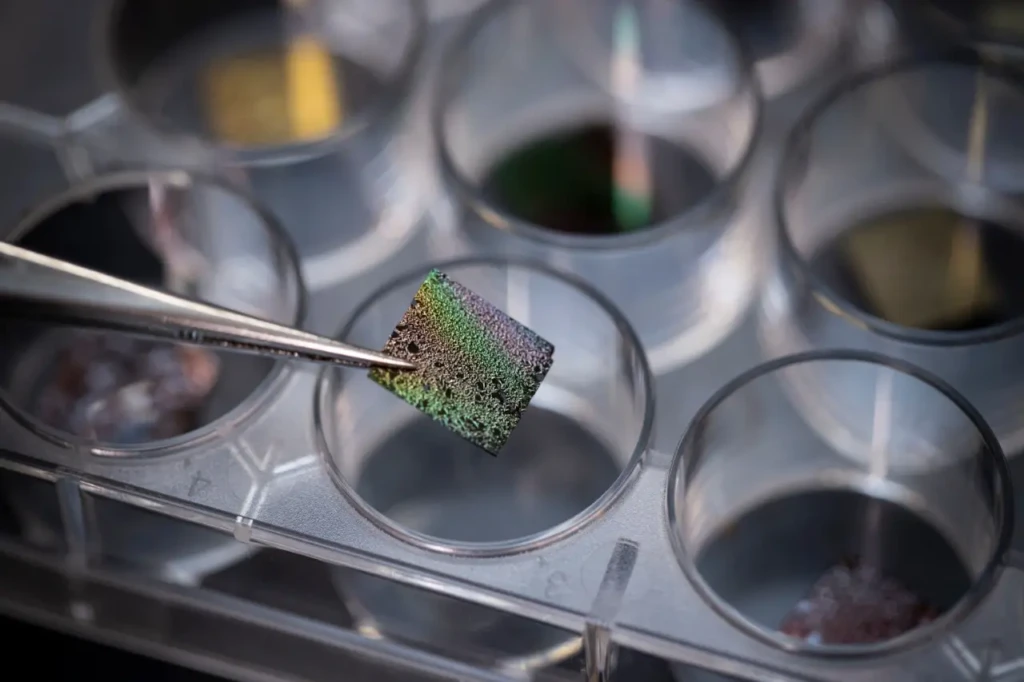
The lab made ‘cosmic dust’ was rich in carbon – a material similar to that found between stars as well as comets, asteroids and meteorites.
In the study published in The Astrophysical Journal, Losurdo described that this dust contains a cocktail of CHON molecules comprising of carbon, hydrogen, oxygen and nitrogen which scientists say is found in many organic substances.
Scientists confirmed the cosmic dust is the same as the real one by identifying infrared signatures which is characteristic of this material.
Why this is a big deal
Explaining the significance of this invention, Losurdo stated – “We no longer have to wait for an asteroid or comet to come to Earth to understand their histories. You can build analogue environments in the laboratory and reverse engineer their structure using the infrared fingerprints.”
According to Losurdo, the results may reveal how plasma released by giant old stars can form cosmic dust and whether the arrival of organic molecules on Earth via comets and meteorites gave birth to life on our planet. It is believed that Earth was bombarded by meteorites and interplanetary dust particles nearly 3.5 to 4.5 billion years ago and subsequently kickstarted the origin of life.
Apart from finding the origins of life, this experiment could also help determine the journey of an asteroid through space. “Its chemical signature holds a record of its journey, and experiments like this help us learn how to read that record,” said Professor David McKenzie, co-author on the paper.
This study has another objective – building a comprehensive database of infrared fingerprints from lab-made cosmic dust. This record could be used to identify stellar nurseries or the remnants of dead stars and work backwards to understand the processes shaping them.
ALSO READ: A New Comet Is Set To Dive Into The Sun And May Be Visible During The Day
ALSO READ: Hubble Telescope Uncovers New Object ‘Cloud-9’ – A ‘Failed Galaxy’ With No Stars