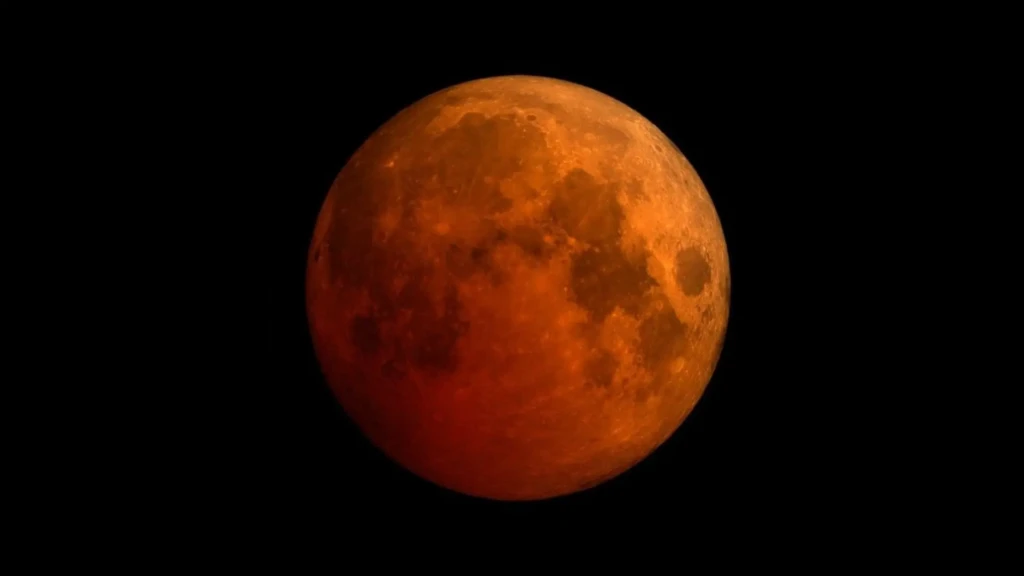
It’s time to look up again! We’re just a day away from the first lunar eclipse of the year that will turn the Moon blood red. The total lunar eclipse on March 3 will be visible to billions of people across multiple countries from the middle east to the Americas.
But first, let us understand what causes a lunar eclipse and why it will bring a ‘Blood Moon.’
A total lunar eclipse is coming 🌕 🌏 ☀️
In the early morning hours of March 3, 2026 (UTC), the full Moon will pass through Earth’s shadow, reddening the lunar surface. Here’s what you need to know: https://t.co/3yyVsE22An
Credit: NASA’s Scientific Visualization Studio pic.twitter.com/D091JHDdqd
— NASA Solar System (@NASASolarSystem) February 24, 2026
How does a ‘Blood Moon’ occur?
When the Earth passes directly between the Sun and the Moon, it casts its shadow across the lunar surface which results in a lunar eclipse and reddish-orange Moon. According to NASA, this alignment occurs only during a full Moon phase.
As for the ‘Blood Moon’ it results from the sunlight passing through the Earth’s atmosphere before they fall onto the Moon. Even if Earth blocks most of the sunlight, some of it filters through the Earth’s atmosphere and the colours with longer wavelengths (red, yellow, orange) fall onto the lunar surface whereas those with shorter wavelengths scatter away.
Where will the eclipse be visible?
The total lunar eclipse will be visible in the evening from eastern Asia and Australia, throughout the night in the Pacific, and in the early morning in North and Central America and far western South America.
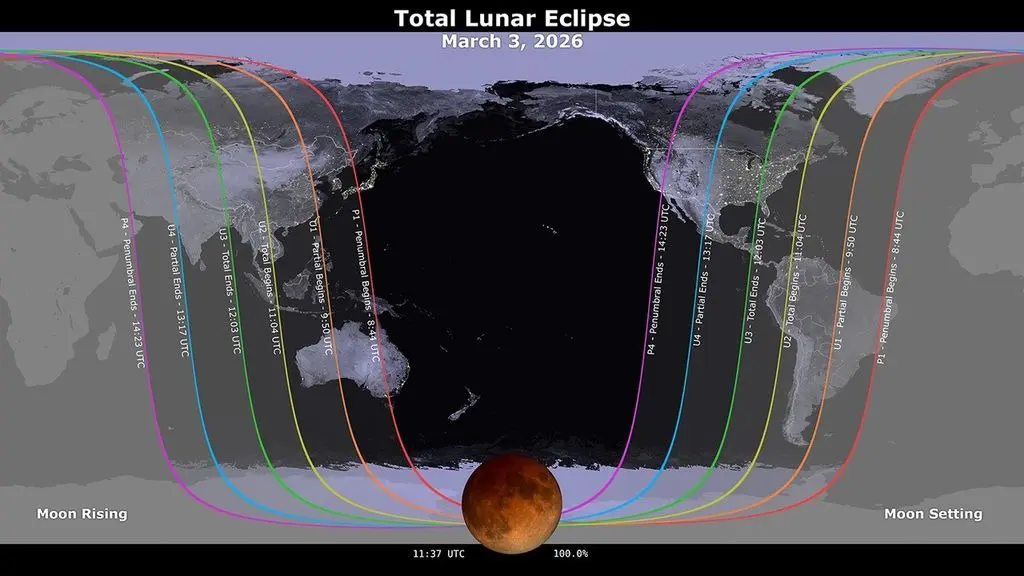
Unfortunately, central Asia and much of South America will have to settle with a partial eclipse. Residents of Europe and Africa will be disappointed as no eclipse will be visible there.
What time will be the eclipse begin?
According to NASA, the Moon will start entering Earth’s penumbra (outer part of the shadow) at 2:14 pm IST [3:44 am EST] on March 3.
The partial eclipse will begin at 3:20 pm IST [4:50 am EST] whereas the totality (when Moon will turn blood red) will start at 4:34 pm IST [4:50 am EST] and end at 5:33 pm IST [7:03 am EST].
The eclipse will finally end at 7:53 pm IST [9:23 am EST], says NASA.
ALSO READ: Universe In A Bottle: How Lab Made Space Dust Will Shape Our Understanding Of The Cosmos
ALSO READ: Donald Trump Has Ordered Release Of Files On Aliens And UFOs; What Should We Expect?