Blue Terra Journal

  • Home
  • Spaceflight
    SpaceflightShow More
    NASA's SR-1 Freedom spacecraft.
    What Is NASA’s SR-1 Freedom Mission? The First Nuclear Reactor In Space Explained
    March 27, 2026
    Artist's impression of a NASA Moon base.
    NASA Moon Base: How The US Will Spend $20 Billion On This Ambitious Project
    March 25, 2026
    Russia's Soyuz rocket ascending to space.
    Russia’s Progress Spacecraft Suffers Mystery Glitch On Its Way To ISS; What Happened?
    March 23, 2026
    Robert Goddard
    Celebrating Robert Goddard – The Man Who Changed Rocketry 100 Years Ago
    March 17, 2026
    International Space Station gets extension to beat China
    Watch Out China! US Proposes Extending International Space Station Lifespan To 2032
    March 10, 2026
  • Astronomy
    AstronomyShow More
    Comet MAPS image
    Video: Comet MAPS destroyed after plunging into the Sun; event caught by NASA missions
    April 18, 2026
    Apophis asteroid flyby
    ‘God Of Chaos’: Apophis Asteroid Will Fly Dangerously Close To Earth Exactly 5 Years From Now
    April 14, 2026
    Meteor spotted over Houston.
    Video Captures 1-Ton Meteor Exploding Over Houston Skies, NASA Releases Statement
    March 22, 2026
    NASA black hole simulation
    Fall Into A Black Hole With This Incredibly Scary Simulation Made By NASA
    March 18, 2026
    Comet C/2026 A1 MAPS
    Comet C/2026 A1 MAPS: What Are ‘Sun-Grazer’ Comets And Why Are They Special?
    March 12, 2026
  • India
    IndiaShow More
    Shubhanshu Shukla aboard the ISS.
    ISRO Astronaut Shubhanshu Shukla Awarded Ashoka Chakra For Heroic Ax-4 Mission
    February 9, 2026
    ISRO's PSLV lifts off to space.
    ISRO’s PSLV Rocket Suffers Third Stage Failure After Successful Liftoff; Payloads Lost
    January 23, 2026
    Dhruva Space team at ISRO facility.
    India’s Dhruva Space To Launch 10 Missions, Including 1st Northeastern Satellite, On ISRO’s PSLV
    January 12, 2026
    ISRO's PSLV rocket
    ISRO To Seek Redemption With PSLV-C62 Mission Launch On January 12
    January 12, 2026
    ISRO SSLV
    ISRO’s SSLV Rocket Just Got Better After Latest Third Stage Test Fire
    December 31, 2025
  • Artemis
    ArtemisShow More
    NASA Artemis II mission
    Welcome Home! NASA’s Artemis II Astronauts Are Back After Historic Moon Voyage
    April 11, 2026
    NASA Artemis II iPhone image
    iPhones Reigned Supreme On NASA’s Artemis II Moon Mission
    April 10, 2026
    Artemis II NASA
    All Eyes On Scary Artemis II Reentry As NASA Moon Mission Nears Completion
    April 9, 2026
    NASA Artemis II
    NASA Artemis II Crew Names Moon Crater ‘Carroll’ After Commander Reid Wiseman’s Late Wife
    April 7, 2026
    NASA Artemis II
    Watch: NASA Artemis II Astronauts Begin Flyby Of Moon’s Far Side For The First Time Ever
    April 9, 2026
  • More
    • About
    • Privacy Policy
    • Terms
    • Contact

Blue Terra Journal

  • Home
  • Spaceflight
  • Astronomy
  • India
  • Artemis
Search
  • Pages
    • About
    • Contact
    • Privacy Policy
    • Terms

Home - Astronomy - Universe In A Bottle: How Lab Made Space Dust Will Shape Our Understanding Of The Cosmos

Astronomy

Universe In A Bottle: How Lab Made Space Dust Will Shape Our Understanding Of The Cosmos

'We no longer have to wait for an asteroid or comet to come to Earth.'

Blue Terra Journal
Last updated: February 24, 2026 10:16 AM
Blue Terra Journal
Share
4 Min Read
University of Sydney space dust
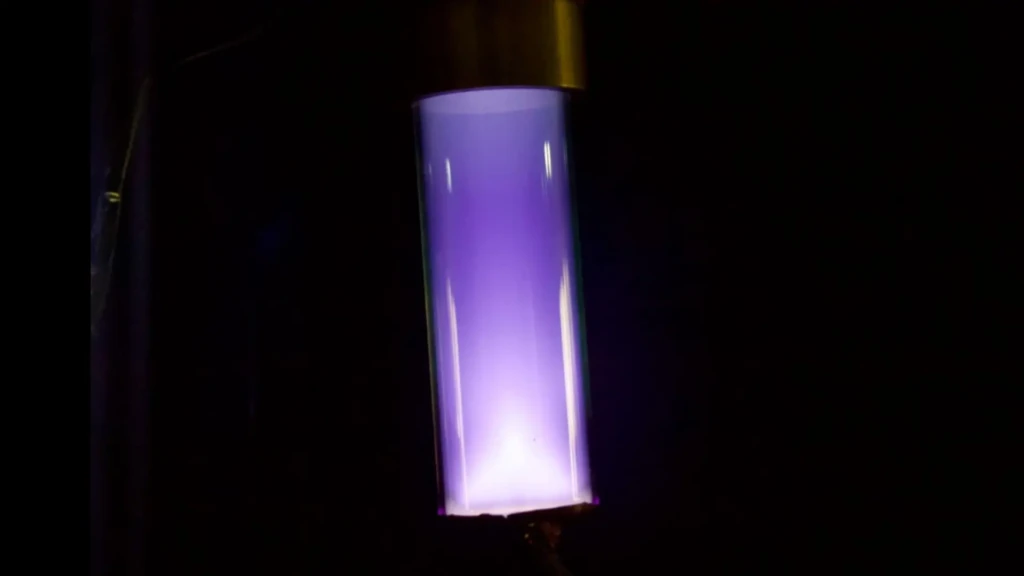
The plasma tube in which space dust was created. Image: University of Sydney
SHARE

In early February, the University of Sydney announced a major breakthrough. One of their students had manufactured space dust in lab from scratch – a feat never achieved before. This achievement is as big as it sounds because scientists believe the results are shedding new light on how the chemical building blocks of life may have formed before Earth’s birth.

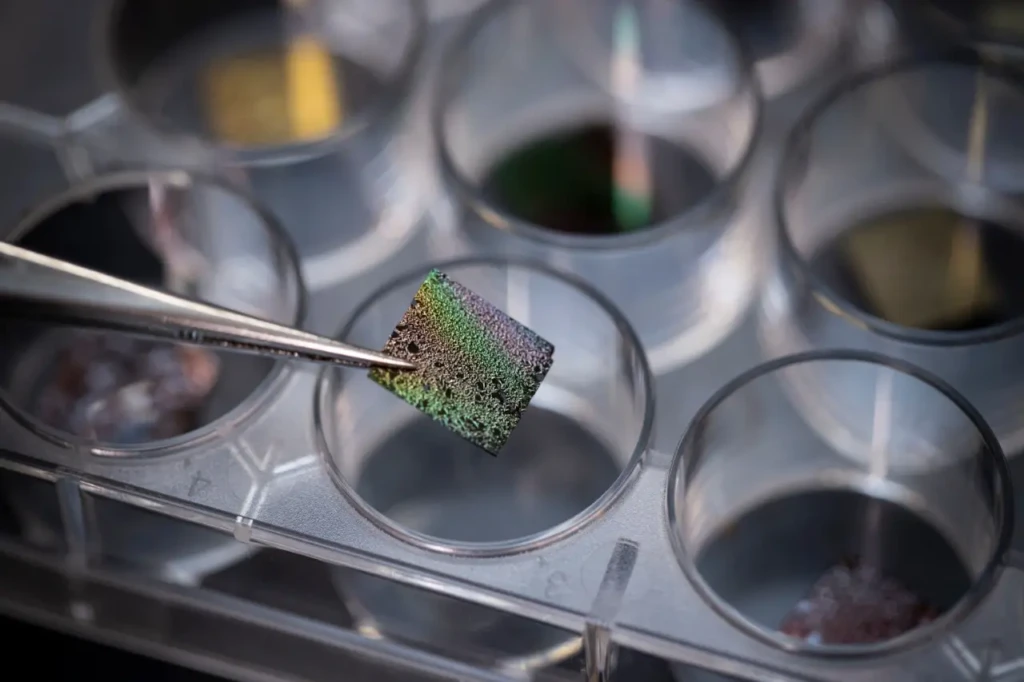
The credit for this milestone goes to Linda Losurdo, a PhD candidate in materials and plasma physics in the School of Physics, who mixed nitrogen, carbon dioxide and acetylene in a tube, mimicking the harsh and dynamic environments around stars and supernova remnants. These gases were then subjected to intense electric energy – 10,000 volts for an hour – which produced a type of plasma called glow discharge. Under this intense electrical potential, the plasma molecules broke down and eventually settled as a thin dust layer on silicon chips placed inside the tubes.
University of Sydney space dust
The cosmic dust analogue settled on a microchip. Image: University of Sydney

The lab made ‘cosmic dust’ was rich in carbon – a material similar to that found between stars as well as comets, asteroids and meteorites.

In the study published in The Astrophysical Journal, Losurdo described that this dust contains a cocktail of CHON molecules comprising of carbon, hydrogen, oxygen and nitrogen which scientists say is found in many organic substances.

Scientists confirmed the cosmic dust is the same as the real one by identifying infrared signatures which is characteristic of this material.

Why this is a big deal

Explaining the significance of this invention, Losurdo stated – “We no longer have to wait for an asteroid or comet to come to Earth to understand their histories. You can build analogue environments in the laboratory and reverse engineer their structure using the infrared fingerprints.”

According to Losurdo, the results may reveal how plasma released by giant old stars can form cosmic dust and whether the arrival of organic molecules on Earth via comets and meteorites gave birth to life on our planet. It is believed that Earth was bombarded by meteorites and interplanetary dust particles nearly 3.5 to 4.5 billion years ago and subsequently kickstarted the origin of life.

Apart from finding the origins of life, this experiment could also help determine the journey of an asteroid through space. “Its chemical signature holds a record of its journey, and experiments like this help us learn how to read that record,” said Professor David McKenzie, co-author on the paper.

This study has another objective – building a comprehensive database of infrared fingerprints from lab-made cosmic dust. This record could be used to identify stellar nurseries or the remnants of dead stars and work backwards to understand the processes shaping them.

ALSO READ: A New Comet Is Set To Dive Into The Sun And May Be Visible During The Day

ALSO READ: Hubble Telescope Uncovers New Object ‘Cloud-9’ – A ‘Failed Galaxy’ With No Stars

TAGGED:astronomyEarthSpacespace dustuniversity of sydney
Share This Article
Facebook Pinterest Whatsapp Whatsapp LinkedIn Copy Link Print

Latest News

Comet MAPS image
Video: Comet MAPS destroyed after plunging into the Sun; event caught by NASA missions
Astronomy
Apophis asteroid flyby
‘God Of Chaos’: Apophis Asteroid Will Fly Dangerously Close To Earth Exactly 5 Years From Now
Astronomy
NASA Artemis II mission
Welcome Home! NASA’s Artemis II Astronauts Are Back After Historic Moon Voyage
Artemis
NASA Artemis II iPhone image
iPhones Reigned Supreme On NASA’s Artemis II Moon Mission
Artemis

You Might Also Like

Comet 3I/ATLAS NASA Avi Loeb
Astronomy

Comet 3I/ATLAS Entered The Oort Cloud 8000 Years Ago. What Was Earth Like Then?

December 15, 2025
Comet 3I/ATLAS
Astronomy

Comet 3I/ATLAS Live Tracking: How To Keep An Eye On This Interstellar Visitor?

January 5, 2026
NASA Mars
Astronomy

NASA Unveils 100000th Image Captured By Its Mars Reconnaissance Orbiter

December 18, 2025
Comet 3I/ATLAS NASA
Astronomy

NASA Finally Releases Comet 3I/ATLAS Images Captured From Mars & Beyond

November 26, 2025
© 2026, Blue Terra Journal
  • About
  • Privacy Policy
  • Terms
  • Contact
Welcome Back!

Sign in to your account

Username or Email Address
Password

Lost your password?