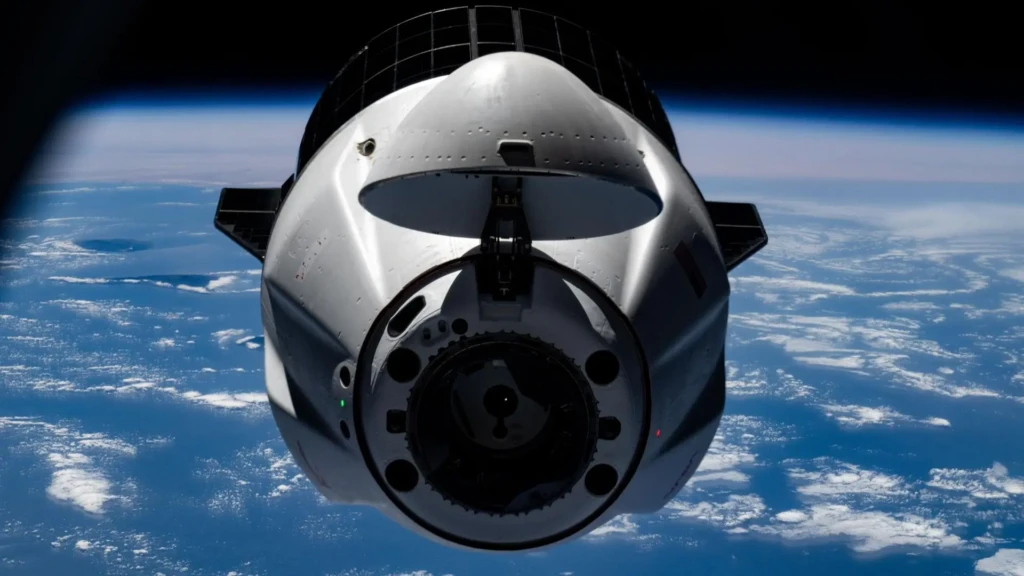
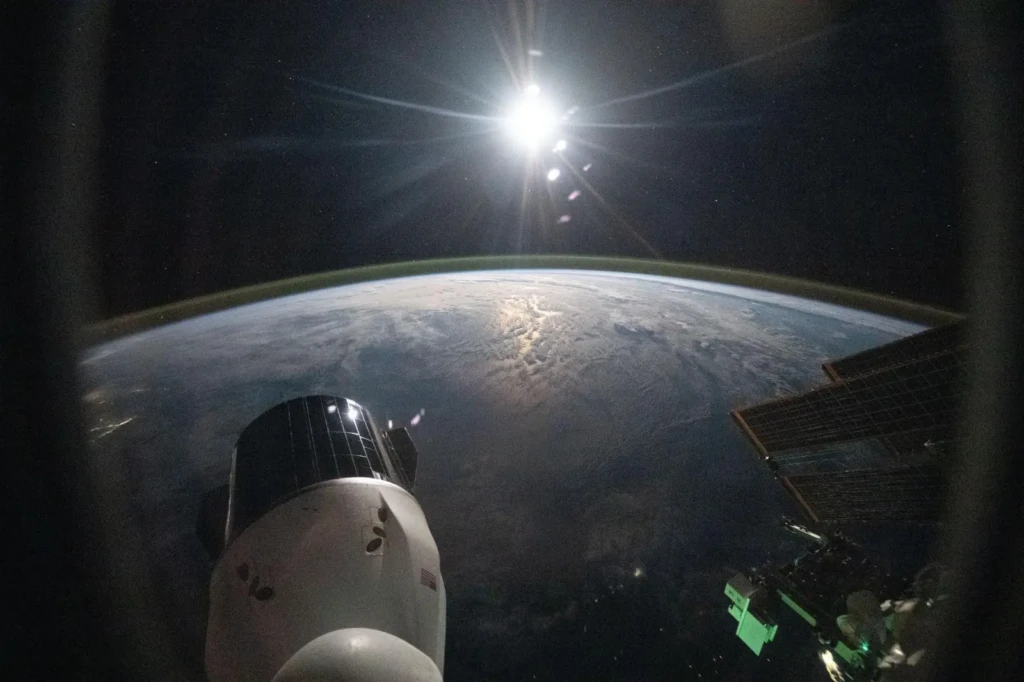
A SpaceX Dragon spacecraft will soon undock from the International Space Station (ISS) to make its journey back to Earth. The spacecraft, according to NASA, will depart from the orbital lab’s Harmony module at 10:35 pm IST [12:05 pm EST] and splashdown a few hours later at 1:14 pm IST off the coast of California.
NASA will stream the event live starting 20 minutes prior to the undocking on NASA+, Amazon Prime, and its YouTube channel. The splashdown, however, will not be livestreamed.
A @SpaceX Dragon spacecraft will depart the orbital outpost on Thursday, Feb. 26, filled with science experiments and lab hardware for retrieval and analysis on Earth. https://t.co/AWDwLQrojv
— International Space Station (@Space_Station) February 23, 2026
This Dragon spacecraft arrived at the station on August 25, 2025. Apart from cargo delivery, it has also been used to perform six reboosts to keep the ISS afloat.
What is SpaceX’s Cargo Dragon bringing home?
NASA says the cargo onboard the Dragon spacecraft will shape future space exploration and improve quality of life on Earth. Once they reach the lab here, scientists will conduct detailed post-flight analysis to study the effects of microgravity.
There’s a Euro Material Ageing study to examine how coatings, insulation, and 3D-printed materials degrade due to exposure to the vacuum of space. Its objective is to improve thermal control using new paint technologies.
Another is Thailand’s Liquid Crystals experiment to determine the stability of films used in electronics in microgravity. “Both could lead to stronger spacecraft, better displays, and improved optical devices on future missions,” NASA stated.
The payload also includes frozen samples from the Stellar Stem Cells Mission 2 experiment aimed at determining how microgravity affects brain and heart stem cell growth. Advancements in this area could lead to better treatments of ALS and Parkinson’s diseases.
Other experiments are the SpaceDuino project, whose objective is to gather performance and reliability data of open source hardware and consumer grade sensors in a microgravity environment, and the Moon Microscope – a portable diagnostic kit for blood analysis that was successfully tested in space and could support future missions to the Moon and Mars.
ALSO READ: NASA Admits Mistake, Designates Boeing’s Crew Mission ‘Type A’ Mishap
ALSO READ: Elon Musk Pivots From Mars To Build ‘Self-Growing’ City On The Moon – What This Means